If you’re seeking out a brand new interest or want to compete with yourself to your own creativity, it’s time to paint your indoors with special wall paint colorations. Painting is an exciting manner to spend satisfactory time with the circle of relatives and it is a awesome manner to contemporize any room inside the domestic. However, without proper know-how of a way to do that well and what merchandise you ought to use, you can find your self frustrated by means of sloppy results or worse! Still there may be hope! Here are 10 hints to be able to get you at the right song toward stunning wall paint colors.
Table of Contents
Choose the Best Wall Paint Colours
Before painting over wallpaper, remove all staples and clips from walls. That gives the painter more space for paintwork and will also save work later down the line when removing staples only adds pain.
Prep your walls. Clean them thoroughly with a good interior cleaner. This helps paint adhere even better than it would with just the surfaces to paint on.
Cut in around windows, door frames and baseboards. This will help you avoid the hassle of covering these areas later on after completion of your painting job. You can eliminate this step if you are painting plain walls only, but if you do choose to go for a decorative look, find yourself a nail or screw and attach some painter’s tape at the bottom wall corners to help guide edges for cutting in touch up work later on down the line when necessary.

Apply primer to the walls. After choosing wall paint colours the next step is to apply premier to the walls. This will ensure a better than average paint job and will also help get rid of any loose dust on the walls. It’s also recommended to use one coat of primer to achieve a better paint job you won’t have to touch up too many times.
If you are painting over wallpaper with different wall paint colours, So make sure that you take care in covering all the paper before moving onto the next step because it is possible to damage the plaster behind it when trying to remove wallpaper and move forwards with preparing for painting. If this happens, then start from the beginning again starting from step 1.
That is also why it’s best to try and paint over wallpaper using rollers as opposed to your hands, to protect your hands from sticking to the plaster underneath. It can also take several hours to cover paper so make sure that you arrange regular breaks so that you don’t burn out during the course of the job.
Begin with a primer coat. Sand down any loose plaster or drywall when applying primer and ensure that you remove all loose dust from walls with a cloth first before starting on primer. This will help make sure that the primer coats bond nicely with the wall without leaving large voids or surface imperfections behind.
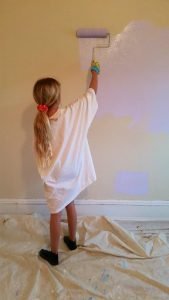
Apply your final coat of paint. Once the primer has dried you can move onto painting the walls. Be sure that you properly cover all areas, including corners and edges.
The best way to ensure this is to use a roller on one half of the wall and then use a brush on the other hand to apply paint through the “roller” side and ensure that you get all of those corners and edges free from paint to keep it looking clean and neat later down the line when people view your painting job.
Leave some space between coats for each coat to dry and also for touch ups later on down the line with a brush or roller as you go along, depending on your chosen method. Don’t skip this step or you can get paint in the cracks and not fix those areas later on down the line.

Remove the painter’s tape when painting is done. If you’ve never used painter’s tape before, it’s important to know that you don’t have to rip it off because that will only leave a huge mark. Instead gently peel the tape away from wall at an angle (the direction in which the tape was originally stuck to wall) so that it doesn’t leave any lines on your wall or cause dents or pain behind paint finish.
Shop for the satisfactory paint. This is an vital step at the same time as selecting wall paint colours. There is a big variety of paints out available on the market to pick from, but if you need to shop time and money, go with a mid grade paint and medium. Higher first-class paints are excellent for finishing touches inside the final step, but you really want a mid grade paint and medium to cowl your partitions in more than one coats without having to worry approximately portray too thick or skinny.
Extra Tip: Clean up any mess that might have been left by you or your tools as soon as possible after finishing. This will help avoid paint rubbing off during cleanup and being left behind later on down the line when people touch it or move things around in room design.
Common Questions Related to Painting
How much will it cost?
The price of the paint job depends on a number of factors. Budget, size and condition of your house, colors you choose and more. If you want to save money, you will have to compromise on the quality of materials and service. That is why we advise only experienced painters use premium brands.
What does paint coverage mean?
Paint coverage is how well a surface is covered with a certain amount of wall paint colours or premier. The greater the amount of coverage, the less coats needed to complete your painting project. This can also translate into how thick or thin your walls are painted with specific products from certain brands. Quality paint coverage is one of the most important factors for an ideal wall painting job.
How long does it take to paint a room?
Painting a room can closing from four hours to six days, relying on the dimensions and complexity of your venture. The average time spent is 2-3 days, which includes drying times and contact-usaall through the method. Actual time spent on portray a room will depend upon quite a number of things inclusive of whether or not or no longer you pick out to feature completing touches or not, how well you put together for the venture and the way meticulous you are whilst preparing for it.
What is the best way to remove wallpaper?
There are two ways in removing wallpaper: carefully and quickly. The first way takes more time and patience, but it can be very useful for thick or stubborn wallpaper. The second way is faster and less likely to damage the surface behind your wall paper but only works with thin, modern wallpaper.
If you have any more questions related to wall paint colours please use the comment section below or browse through our paint guides for more information about painting and related topics.
READ NEXT: Top 5 trendy hues for your dreamy bedroom
RELATED TOPICS: Painting ideas