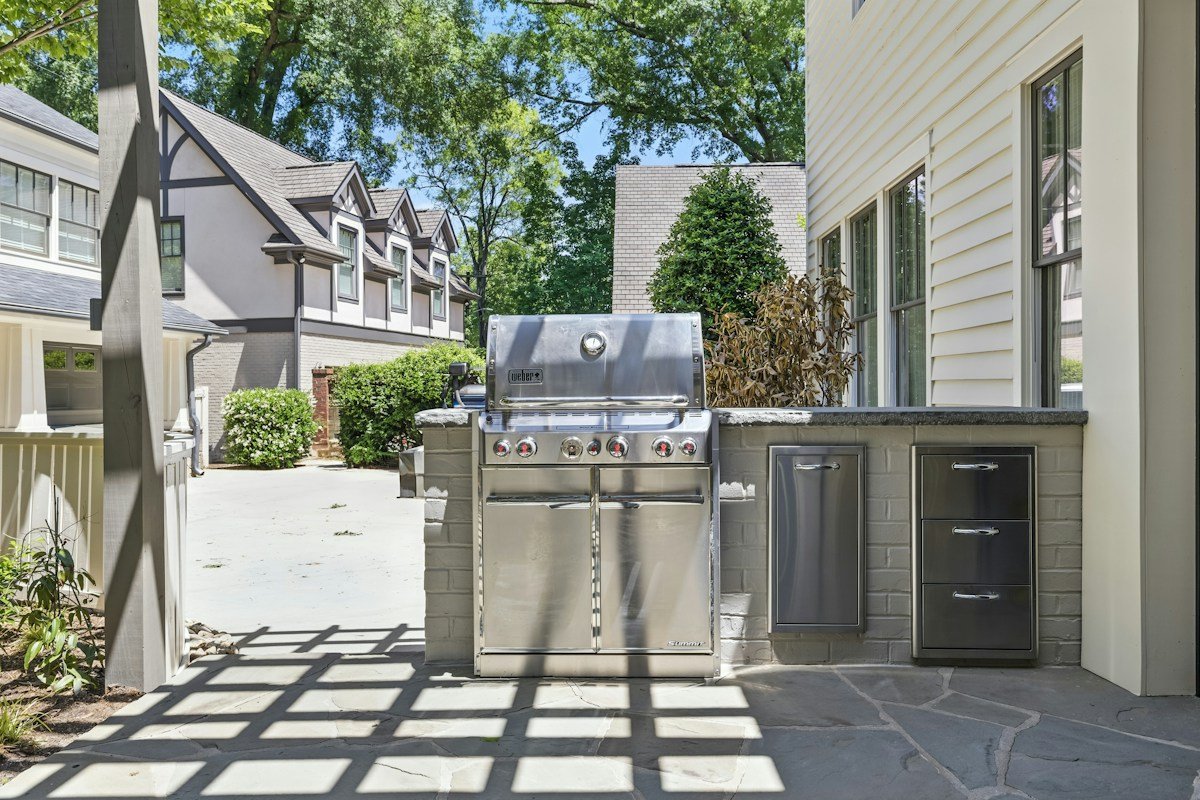
The outdoor kitchen has evolved from a luxury novelty into the crown jewel of modern residential landscape architecture. The days of wheeling a flimsy, standalone charcoal kettle grill across an uneven wooden deck while balancing barbecue tongs and paper plates are officially over. Today’s discerning homeowners demand comprehensive, built-in alfresco culinary suites: open-air chef pavilions equipped with commercial-grade gas grills, high-output power burners, undercounter beverage refrigerators, integrated sink prep stations, and expansive dining bar ledges that rival the finest indoor kitchens.
However, designing an outdoor kitchen presents formidable engineering and material challenges that do not exist within the climate-controlled envelope of a home. An outdoor kitchen operates in a brutally hostile exterior environment. It is subjected to blistering ultraviolet solar radiation, torrential rainstorms, freezing winter ice, broad seasonal thermal expansion cycles, high-temperature grill flames exceeding eight hundred degrees Fahrenheit, acidic lemon and tomato marinade spills, and splashing barbecue grease. Specifying standard indoor building materials: such as traditional wood cabinetry, indoor engineered quartz counters, or low-grade metals: results in rapid, catastrophic failure: rotting casework, warped doors, bleached counters, and unsightly rust within a single season.
Building an enduring, high-performance outdoor kitchen requires uncompromising adherence to specialized exterior material science. The two foundational pillars of any successful outdoor culinary island are weather-proof countertop surfaces and marine-grade stainless-steel casework. When planned with rigorous spatial ergonomics, gas safety clearances, and precision utility rough-ins, a built-in outdoor kitchen transforms your backyard into an extraordinary entertainment destination that increases property value and delivers decades of culinary memories.
Planning and constructing a world-class outdoor culinary island requires synthesizing outdoor kitchen design standards from the National Kitchen and Bath Association, outdoor fuel gas safety directives from the National Fire Protection Association, metallurgical stainless-steel specifications from the Specialty Steel Industry of North America, natural stone fabrication standards from the Natural Stone Institute, and appliance performance metrics certified by the American National Standards Institute. This technical handbook provides an exhaustive, authoritative blueprint for planning, detailing, specifying, and building a professional outdoor kitchen island.
Stainless Steel Metallurgy: Grade 304 vs Marine Grade 316 vs Grade 430
Stainless steel is universally recognized as the undisputed champion material for outdoor kitchen cabinetry, access doors, storage drawers, and cooking appliances. Its sleek, industrial aesthetic complements modern stone and concrete finishes, while its non-porous surface provides hygienic food safety. However, the term “stainless steel” is a broad metallurgical umbrella covering radically different alloy formulations with vastly different corrosion-resistance properties.
All stainless steels are iron-based alloys containing a minimum of 10.5 percent chromium. When exposed to atmospheric oxygen, the chromium naturally reacts to form an invisible, microscopically thin, self-healing surface layer of chromium oxide. This passive film prevents oxygen and moisture from reaching the underlying iron, halting rust. However, the thickness, stability, and chemical resilience of this passive film depend entirely on the presence of secondary alloying elements: primarily nickel and molybdenum.
Grade 304 Stainless Steel (commonly referred to as 18/8 stainless steel) represents the luxury industry standard for residential outdoor kitchens located in inland, non-coastal environments. Formulated with eighteen percent chromium and eight percent nickel, Grade 304 provides formidable resistance to oxidation, rainwater, and organic food acids. The high nickel content stabilizes the austenitic crystal structure, enhancing ductility and weldability while dramatically boosting corrosion resistance compared to basic carbon steels. Grade 304 cabinets will endure decades of outdoor exposure in suburban and rural climates with minimal maintenance.
Grade 316 Stainless Steel (Marine-Grade Stainless) represents the ultimate metallurgical pinnacle for harsh exterior environments. Grade 316 contains sixteen percent chromium, ten percent nickel, and crucially, two to three percent molybdenum. Molybdenum fundamentally alters the alloy electrochemical resistance: specifically neutralizing aggressive chloride ions found in ocean salt spray and saltwater swimming pool environments. If your outdoor kitchen is situated within five to ten miles of an ocean coast, or within close proximity to a chlorinated or saltwater pool, Grade 316 is non-negotiable. Standard Grade 304 in coastal salt air will develop microscopic pitting corrosion and unsightly brown tea-staining within months; Grade 316 remains pristine and impervious to marine salt degradation indefinitely.
Grade 430 Stainless Steel is a low-cost ferritic alloy that must be aggressively avoided in permanent outdoor kitchens. Grade 430 contains sixteen to eighteen percent chromium but zero nickel. Because nickel is the most expensive raw element in stainless-steel production, budget manufacturers use Grade 430 to sell cheap outdoor grill carts and budget access doors. Grade 430 is magnetic (a simple refrigerator magnet will stick firmly to it, whereas quality 304 and 316 are non-magnetic), has poor ductility, and will rapidly develop surface pitting, structural rust spots, and hinge seizure after a single wet winter outdoors.
Material thickness (gauge) dictates physical rigidity. Flimsy twenty-gauge sheet metal feels tinny, flexes under hand pressure, and dents easily upon impact. Demand heavy-duty sixteen-gauge (1.5mm) or eighteen-gauge (1.2mm) 304-grade stainless steel for all structural cabinet framing, drawer boxes, and exterior door panels. Heavy-gauge stainless casework closes with a solid, satisfying thud and easily supports the heavy weight of cast-iron pans, propane tanks, and outdoor dishware.
Stainless Steel Cabinet Architecture and Weatherproofing Engineering
Selecting high-grade stainless steel is only half the battle; the physical engineering and assembly architecture of the cabinetry dictate whether interior storage stays dry or turns into a mildew-ridden swamp during rainstorms. Outdoor cabinets cannot be constructed like indoor cabinets; they must feature specialized drainage and sealing mechanics.
Continuous Perimeter Gaskets and Drip Rails: When torrential wind-driven rain strikes an outdoor island, water cascades down the cabinet face. Professional outdoor cabinets incorporate an overhanging upper drip flange and continuous automotive-grade silicone or EPDM magnetic compression gaskets running along the entire inner perimeter of the door and drawer frames. When closed, the door seals airtight against the frame, completely preventing wind-driven rainwater, dust, and garden insects from penetrating interior dry storage cavities.
Double-Wall Insulated Door Construction: Single-sheet metal doors rattle loudly in the wind, feel flimsy, and conduct intense outdoor heat directly into the cabinet interior. Luxury outdoor casework features double-wall construction: an exterior sixteen-gauge stainless-steel face welded to an interior stainless-steel liner, sandwiching a core of high-density sound-dampening insulation or honeycomb aluminum. This dual-wall design provides rock-solid structural rigidity, eliminates metallic tinny vibrations, and keeps interior storage temperatures significantly cooler on sun-drenched summer afternoons.
Heavy-Duty Marine-Grade Drawer Glides and Hardware: Drawer slides represent a common mechanical failure point in outdoor kitchens. Standard indoor drawer glides utilize zinc-plated steel ball bearings that seize up and rust when exposed to outdoor humidity. Premium outdoor cabinets utilize full-extension, heavy-duty soft-close drawer glides fabricated entirely from 304 stainless steel, rated for dynamic loads exceeding one hundred to one hundred and fifty pounds. This allows deep drawers to effortlessly hold heavy bags of hardwood lump charcoal, cast-iron Dutch ovens, and full beverage bottles without sagging or binding.
Integrated Floor Weep Drains and Ventilation Louvers: Even with advanced gaskets, condensation can form inside sealed metal boxes during rapid seasonal temperature swings. Quality outdoor cabinets feature sloped internal floor pans fitted with discreet drain weeps, allowing any incidental condensation to drain safely out through the base of the island. Furthermore, cabinets housing trash receptacles or propane tanks must feature precision-stamped ventilation louvers to ensure continuous air exchange.
Outdoor Countertop Material Science: Granite vs Porcelain Slabs vs Concrete vs Quartz
The outdoor kitchen countertop is the primary horizontal work surface, subjected to the harshest environmental punishment. Choosing the right countertop material is where homeowners frequently make catastrophic mistakes: seduced by indoor kitchen trends that fail disastrously when exposed to outdoor weather.
Why Indoor Engineered Quartz FAILS Outdoors: Engineered quartz (such as Caesarstone, Silestone, or Cambria) is the most popular indoor countertop material in the world. However, engineered quartz is fundamentally a composite product consisting of roughly ninety percent crushed quartz stone bound together by seven to ten percent petroleum-based polymer polyester resins and chemical pigments. When exposed to direct outdoor ultraviolet (UV) solar radiation, these polymer resins undergo severe photochemical degradation. Within twelve to twenty-four months, white and light quartz yellows into an unsightly dingy amber, dark quartz bleaches out, and the thermal shock of hot summer sun alternating with cold rain can cause the entire slab to warp and crack. Standard indoor engineered quartz should NEVER be installed outdoors.
Natural Granite (Honed, Flamed, or Leathered): Natural quarried granite represents the time-tested, gold-standard countertop material for outdoor kitchens. As an igneous geological rock formed under extreme tectonic heat and pressure, granite is 100 percent natural mineral crystalline stone containing zero synthetic resins. It is completely immune to ultraviolet solar fading, will never warp, and possesses extraordinary heat resistance: you can set a blazing five-hundred-degree cast-iron skillet straight off the grill directly onto a granite counter without burning or scorching the surface.
When selecting granite for outdoor kitchens, finish texture and color selection require careful thought. Polished high-gloss granite reflects blinding midday sun glare directly into the cook’s eyes and can feel hot to the touch. Specify a honed (matte), leathered (textured), or flamed finish. Textured finishes soften sun glare, provide slip-resistant tactile grip, and hide minor dust and fingerprints. Furthermore, in hot southern climates, avoid dark black granites (such as Absolute Black), which absorb solar radiation and become hot enough to burn bare forearms (reaching surface temperatures over 150°F). Specify light to medium-toned granites: such as Luna Pearl, Bianco Romano, or Silver Cloud: which remain comfortable to the touch under bright summer sun.
Sintered Stone and Ultra-Compact Porcelain Slabs (Dekton, Neolith, Lapitec): Sintered stone represents the cutting-edge pinnacle of modern outdoor countertop engineering. Sintered surfaces are manufactured by subjecting 100 percent natural raw mineral clays, feldspars, and silica to extreme hydraulic compaction (twenty-five thousand tons) and firing them inside state-of-the-art kilns at temperatures exceeding 2,200 degrees Fahrenheit: replicating in hours the metamorphic processes that take Mother Nature millions of years.
The resulting ultra-compact slab possesses revolutionary physical properties: zero porosity (water absorption below 0.05 percent), total Class A1 non-combustible fire resistance, complete ultraviolet colorfastness, and near-diamond surface hardness (Mohs scale 7-8). You can chop vegetables directly on the surface without cutting boards, spill hot grease or red wine without staining, and endure freezing sub-zero winter freezes without cracking. Sintered stone is completely immune to thermal shock, making it the premier contemporary outdoor countertop material in the world, though it requires specialized diamond fabrication tooling during installation.
Poured-in-Place and Precast Concrete: Concrete countertops deliver an architectural, industrial-modern aesthetic that pairs beautifully with wood-framed pergolas and modern landscape architecture. Cast with structural wire mesh or glass fiber reinforced concrete (GFRC), concrete allows for seamless custom curves, integrated drainboards, and chiseled rock-faced edges. However, concrete is inherently porous and calcium-based: requiring regular sealing with high-performance food-safe penetrating polyaspartic or polyurethane sealers to prevent acidic citrus juice, barbecue sauce, and red wine from etching and staining the porous surface.
Natural Soapstone: A dense metamorphic talc-based stone that provides remarkable heat resistance and timeless rustic beauty. Soapstone is chemically inert: acids, chemicals, and hot grease cannot stain or etch it. It naturally darkens over time into a deep, rich charcoal patina. While soapstone is softer than granite and can scratch if struck by heavy sharp metal utensils, surface scratches can be sanded out effortlessly in minutes with ordinary sandpaper and treated with organic mineral oil.
Countertop Edge Profiles and Underside Drip Kerf Engineering
The edge detailing of an outdoor countertop serves both high-end aesthetic presentation and vital hydraulic water defense. In luxury outdoor kitchen installations, stone fabricators create dramatic visual mass by executing mitered apron edge profiles. While standard stone slabs measure three centimeters (1-1/4 inches) in thickness, a mitered apron bonds a dropped vertical stone fascia: typically two to three inches tall: cut at a precision forty-five-degree bevel joint. This creates the optical illusion of a colossal, solid three-inch-thick stone slab, conveying extraordinary luxury and grounding the island visually.
However, the most critical engineering detail on an outdoor countertop is completely invisible to casual viewers: the underside drip kerf (saw kerf). In outdoor environments, rainwater and splashing sink water naturally flow toward the countertop edge. Under surface tension and capillary action, water clinging to the underside of the stone will curl back horizontally toward the island cabinetry. If water reaches the cabinet face, it trickles into stainless-steel drawer seams and stains stone veneer facades.
To defeat capillary back-flow, stone fabricators must cut an engineered continuous drip groove (drip kerf) into the underside of the countertop overhang. The kerf is a 1/8-inch wide by 1/8-inch deep saw cut routed parallel to the stone edge, positioned exactly one inch back from the outer face. When water droplets wrap around the front edge and attempt to travel inward, they hit the sudden physical break of the drip groove. Capillary tension breaks instantly, forcing water to drop harmlessly to the patio floor before it can ever touch the stainless-steel cabinet frames or veneer walls.
Spatial Ergonomics and The Outdoor Kitchen Work Triangle
A poorly configured outdoor kitchen forces the chef to run back and forth awkwardly across the patio, dodging guests and burning food. Professional kitchen designers configure outdoor culinary islands around the Four Functional Work Zones and the ergonomic outdoor work triangle:
Zone 1: The Cold Zone. Encompasses undercounter outdoor refrigerators, beverage coolers, dedicated ice makers, and wine chillers. The Cold Zone should be positioned on the outer perimeter of the island, accessible to guests grabbing cold drinks without walking through the primary chef cooking path.
Zone 2: The Hot Zone. Encompasses built-in gas grills, charcoal smokers (such as ceramic Kamado grills like Big Green Egg), high-heat searing stations, and wood-fired pizza ovens. The Hot Zone serves as the central focal point of the island, requiring ample clearance and non-combustible surroundings.
Zone 3: The Wet Zone. Encompasses the outdoor marine-grade stainless sink, pull-out trash/recycling bins, and prep faucet. Positioning the sink adjacent to the prep counter and trash drawer allows the cook to rinse vegetables, trim meats, and dispose of scraps in a single fluid motion.
Zone 4: The Dry Zone. The expansive, uninterrupted countertop expanse dedicated to meal plating, carving large cuts of meat, and staging serving platters.
Countertop Landing Clearances: Never crowd a built-in grill tightly against a wall or the edge of an island! Ergonomic design mandates a minimum of twenty-four to thirty-six inches of continuous landing space on the right side of the grill (for holding raw meat platters and cooking utensils), and a minimum of eighteen to twenty-four inches on the left side (for holding cooked food platters and resting cutting boards).
Island Height and Depth Dimensions: Standard outdoor prep countertops are built to a height of thirty-six inches above the finished patio floor with a working depth of thirty inches (providing four inches of extra depth behind built-in grills for proper hood clearance). For islands incorporating an integrated dining counter, designers create a two-tier split-level surface: raising the dining ledge to forty-two inches (bar height) with a minimum overhang of twelve to fifteen inches to provide generous legroom and knee clearance for seated guests.
Ceramic Kamado and Smoker Integration Mechanics
The explosive rise of ceramic Kamado cookers (such as Big Green Egg, Kamado Joe, and Primo) has made smoker integration a top priority for outdoor kitchen enthusiasts. However, dropping a ceramic smoker into an island introduces unique structural and thermal challenges that differ completely from standard gas grills.
First, ceramic cookers are exceptionally heavy: a large or extra-large Kamado weighs between two hundred and two hundred and fifty pounds empty, easily exceeding three hundred pounds when loaded with heavy cast-iron cooking grates, ceramic heat deflectors, and fifty pounds of pork shoulder! The internal supporting shelf inside the island must be structurally reinforced with heavy-duty structural steel or welded aluminum framing: capable of supporting four hundred pounds of live static load without sagging.
Second, ceramic cookers generate intense thermal radiant heat through their circular firebox bases. Even though thick ceramic walls insulate well, the base of a Kamado reaches temperatures exceeding three hundred to four hundred degrees Fahrenheit during multi-hour barbecue sessions. Never place a ceramic cooker directly onto a combustible wood shelf or directly onto thin metal! The cooker base must sit atop an engineered non-combustible ceramic heat shield pad, a thick slab of natural granite, or specialized commercial stainless-steel cooker feet that provide a one-inch air gap beneath the base to dissipate heat safely.
Ventilation and Combustible Clearance Physics
Operating high-heat cooking appliances outdoors involves serious fire safety protocols regulated by national building codes (NFPA 54 and NFPA 211). Built-in gas grills generate immense BTUs (frequently exceeding 60,000 to 100,000 BTUs per hour), and improper installation can easily ignite surrounding island framing.
The Non-Negotiable Insulated Grill Jacket: If your outdoor kitchen island framing contains any combustible materials: including pressure-treated wood studs, cedar framing, or plywood sub-counters: you CANNOT simply slide a built-in metal grill directly into the cutout! The exterior firebox of a gas grill reaches temperatures exceeding 700 degrees Fahrenheit, which will ignite adjacent wood framing via pyrolysis. Building codes mandate installing an engineered Insulated Grill Jacket (a double-walled 304 stainless-steel insulated safety sleeve). The insulated jacket drops into the rough framing cutout, and the grill drops inside the jacket, maintaining an engineered air barrier that isolates framing from dangerous thermal conduction.
Island Gas Venting Physics: Fuel gas leaks are a deadly hazard in outdoor kitchens. Gas grills connect to either Natural Gas (NG) or Liquid Propane (LP). These two fuels possess fundamentally different molecular weights, dictating where island safety vents must be cut:
Natural Gas (NG) is lighter than air (specific gravity ~0.60). If a natural gas fitting develops a micro-leak, the gas rises upward. Therefore, natural gas islands must feature ventilation louvers cut into the top four inches of the island walls, allowing leaking gas to escape harmlessly into the open air.
Liquid Propane (LP) is significantly heavier than air (specific gravity ~1.50). If a propane tank or regulator leaks, the gas sinks to the bottom of the island, pooling invisibly across the patio floor inside the cabinet base. If unvented, a single spark from an electrical switch or grill igniter can trigger a catastrophic explosion! Propane islands MUST feature ventilation louvers cut into the bottom two inches of the island base on opposing sides to promote continuous cross-ventilation and allow pooled propane to drain out safely.
Utility Infrastructure Rough-Ins: Gas, Electric, Plumbing, and Drainage
Behind the gleaming stone and polished stainless steel sits the complex mechanical infrastructure that powers an outdoor culinary island. Coordinating utility rough-ins before pouring the patio slab prevents costly concrete trenching and demolition later.
Fuel Gas Supply Lines: High-output built-in grills demand robust fuel flow. When running a dedicated Natural Gas line from the home main meter to the outdoor island, plumbers must calculate equivalent pipe length and total connected BTUs using National Fuel Gas Code (NFPA 54) sizing tables. While a small barbecue requires a 1/2-inch line, an island powering an 85,000 BTU grill, a 60,000 BTU power burner, and a 40,000 BTU fire table requires a minimum 3/4-inch or 1-inch buried polyethylene or coated iron gas line equipped with a manual emergency shut-off valve accessible on the outside of the island.
Electrical Distribution and GFCI Protection: All outdoor electrical circuits must comply with National Electrical Code (NEC Article 406.9) wet-location standards. Dedicated 20-amp, 120-volt circuits are required to power rotisserie motors, interior cabinet lighting, electronic grill igniters, and undercounter refrigerators. Every outdoor receptacle must feature Class A Ground-Fault Circuit-Interrupter (GFCI) protection, housed inside heavy-duty die-cast aluminum “in-use” weatherproof bubble covers (extra-duty rated) that seal tight even when cords are plugged in.
Plumbing Rough-Ins and Freeze Protection: Supplying water to an outdoor sink requires running PEX or copper water lines from the home basement through frost-line trenches. The most critical plumbing detail is winterization drainage: the supply lines inside the heated home basement must be fitted with dual shut-off valves equipped with waste drain bleeder ports. In autumn, homeowners close the interior shut-off, open the outdoor sink faucets, and open the basement bleeder port, draining all standing water from the lines to prevent freeze-bursting during winter freezes.
Sink drainage must be routed into the home municipal sewer line or a dedicated landscape dry well (where local plumbing codes permit greywater dry-well disposal for hand-washing sinks). The outdoor sink trap must feature a removable clean-out plug to allow complete drainage during winterization.
Integrated Outdoor Refrigeration and Specialty Cooking Appliances
An outdoor kitchen is incomplete without dedicated outdoor-rated appliances engineered to handle intense exterior meteorological cycling.
UL-Rated Outdoor Refrigerators: Never attempt to save money by installing an indoor mini-fridge into an outdoor kitchen island! Indoor refrigerators are designed to operate in sixty-eight-degree air-conditioned rooms with passive rear compressor coils. In an outdoor island where ambient summer air reaches ninety-five degrees Fahrenheit and internal cabinet temperatures hit one hundred and twenty degrees, an indoor compressor will run continuously, overheat, burn out within weeks, and void its warranty. Authentic outdoor-rated refrigerators (certified to UL 471 standards) feature heavy-duty 304 stainless-steel exterior bodies, high-capacity forced-air front-venting compressors, and dense internal insulation capable of holding food safe at thirty-eight degrees Fahrenheit even in one-hundred-degree ambient summer heat.
Dedicated Power Burners: Standard indoor stove burners produce 9,000 to 12,000 BTUs: inadequate for boiling a massive thirty-quart stockpot of sweet corn or seafood outdoors. Installing a heavy-duty outdoor power burner (producing 60,000 to 100,000 BTUs with dual-ring brass burners) delivers commercial-scale firepower for deep frying turkeys, boiling shellfish, or authentic high-heat wok cooking without filling your indoor home kitchen with steam and lingering cooking odors.
Artisan Hybrid Pizza Ovens: Built-in outdoor pizza ovens have become the ultimate social centerpiece. Firing with hardwood lump charcoal, seasoned oak logs, or gas hybrid burners, these refractory ceramic-lined ovens reach scorching temperatures exceeding 900 degrees Fahrenheit, baking authentic Neapolitan-style pizzas with blistered, airy crusts in just sixty to ninety seconds.
Structural Island Framing: Welded Aluminum vs Cold-Formed Steel vs Concrete Block (CMU)
The internal skeleton supporting the heavy countertops and stainless-steel appliances must be completely structural, rot-proof, and non-combustible. Residential outdoor islands utilize three primary structural framing methods:
Welded Architectural Aluminum Tube Framing: Represents the premier modern framing method. Fabricated from 1.5-inch or 2-inch square extruded 6063-T6 aluminum tubing welded into rigid structural modules, aluminum frames are lightweight, exceptionally strong, and 100 percent immune to rust. Aluminum frames can be prefabricated off-site, transported easily across delicate landscape lawns, and leveled effortlessly over existing concrete or paver patios without requiring massive footings. The frame is sheathed in 1/2-inch cementitious backer board (such as HardieBacker or PermaBase) before applying stone veneer or tile.
Concrete Masonry Units (CMU Block): Traditional split-face or hollow core concrete blocks (8x8x16 inches) mortared together over a reinforced concrete slab provide monumental structural mass and century-scale permanence. CMU construction is completely non-combustible, impervious to moisture, and provides an indestructible backing for natural stone veneer or brick facades. However, CMU blocks are extraordinarily heavy (forty to fifty pounds per block), require poured concrete footings below frost depth, and make future utility modifications or appliance resizing extraordinarily difficult.
Cold-Formed Light-Gauge Steel Studs (Galvanized Steel): Utilizes heavy-duty structural galvanized steel tracks and studs (minimum 20-gauge or 18-gauge G90 galvanized steel) fastened with corrosion-resistant ceramic-coated screws. Steel studs offer excellent non-combustible framing at an economical price point, but all field cuts must be coated with cold-galvanizing zinc paint to prevent corrosion along sheared edges.
Outdoor Countertop Specification and Performance Analysis
The comparative analysis table below synthesizes key architectural performance metrics, solar ultraviolet stability, heat resistance ratings, stain and acid resistance, freeze-thaw durability, maintenance sealing frequencies, and installed cost expectations across four primary outdoor countertop materials: Honed Natural Granite, Ultra-Compact Sintered Porcelain Slabs, Poured-in-Place Engineered Concrete, and Natural Soapstone.
| Countertop Material System | Solar UV Stability | Heat Resistance (°F) | Stain & Acid Immunity | Freeze-Thaw Resilience | Maintenance Sealing Cycle | Installed Cost per Lin Ft |
|---|---|---|---|---|---|---|
| Honed Natural Granite | 100% Total (Natural mineral) | Up to 900°F (Hot pans safe) | High (When sealed properly) | Exceptional (Dense crystalline) | Annual (Penetrating sealer) | .00 – .00 |
| Ultra-Compact Sintered Porcelain | 100% Total (Zero polymer resin) | Up to 1,200°F (Direct fireproof) | Total (Zero porosity <0.05%) | Absolute (Zero water entry) | Zero (Never requires sealer) | .00 – .00 |
| Poured Engineered Concrete | High (Mineral pigments stable) | Up to 450°F (Sealer burns) | Moderate (Acids etch surface) | Moderate (Must stay sealed) | Every 1 – 2 Years (Topical) | .00 – .00 |
| Natural Soapstone | 100% Total (Chemically inert) | Up to 1,000°F (Extreme heat) | Total (Impervious to all acids) | Exceptional (Zero absorption) | Optional (Mineral oil patina) | .00 – .00 |
Interpreting this comparative data illustrates the distinct technical trade-offs governing outdoor countertop selection. Ultra-compact sintered porcelain (such as Dekton or Neolith) stands as the undisputed champion of modern outdoor culinary engineering. With zero porosity, absolute immunity to food acids, total fire resistance, and zero maintenance sealing demands, sintered stone effortlessly defeats every harsh outdoor element while providing sleek, monolithic contemporary aesthetics.
Honed natural granite remains the timeless, proven workhorse of residential outdoor kitchens. Offering exceptional natural beauty, rock-solid durability, and extreme heat resistance at an accessible investment tier, granite delivers phenomenal value. Applying an annual coat of high-performance penetrating fluoropolymer sealer takes less than twenty minutes and protects the stone against red wine, grease, and olive oil stains for another twelve months of joyful cooking.
Poured concrete and natural soapstone cater to distinct architectural preferences. Concrete provides bold industrial character and bespoke custom curves, but demands strict vigilance with topical sealers to prevent acidic marinades from etching its surface. Soapstone delivers ancient, silky tactile elegance and complete chemical immunity, making it an extraordinary choice for classic rustic outdoor kitchens that embrace an evolving, authentic charcoal patina over decades of family celebrations.
Frequently Asked Questions
Can I install an indoor refrigerator in an outdoor kitchen to save money?
No, installing an indoor refrigerator in an outdoor kitchen is a recipe for rapid failure. Indoor units are engineered to operate in sixty-eight-degree air-conditioned rooms. When subjected to ninety-degree summer heat and high humidity outdoors, the undersized compressor will run continuously, overheat, burn out within a few months, and void its manufacturer warranty. Always install a certified UL-rated outdoor refrigerator with forced-air front venting and 304 stainless-steel construction.
Do outdoor kitchens need to be covered by a roof or pergola?
While outdoor kitchens built with marine-grade stainless steel and natural granite can survive open weather, covering the kitchen with a roof or pergola dramatically extends its functionality and equipment lifespan. An overhead cover protects the chef and guests from scorching midday sun and sudden rain, keeps countertops cool, and prevents barbecue smoke from drifting back toward open home windows.
How do I prevent stainless-steel outdoor cabinets from rusting?
To prevent rust, ensure your cabinets are fabricated from true Grade 304 (or marine Grade 316 in coastal zones) stainless steel, never Grade 430. Regularly clean surfaces using warm water, mild soap, and a microfiber cloth, always wiping parallel to the grain. Never use steel wool or chlorine bleach, which introduce iron contamination and strip protective passive films. Apply a specialized stainless-steel protectant polish twice a year to maintain its passivated surface barrier.
Why are vents required on an outdoor kitchen BBQ island?
Island vents are a mandatory safety feature to prevent fuel gas pooling and catastrophic explosions. If a gas line or regulator develops a leak inside an unvented hollow island, gas accumulates inside the cavity. A single spark from an electrical outlet or grill igniter can trigger an explosion. Vents must be installed near the top of the island for natural gas (lighter than air) and near the bottom for propane (heavier than air).
Can I chop food directly on granite or sintered stone countertops?
While ultra-compact sintered stone and granite possess extreme surface hardness that resists knife scratches, chopping directly on the stone is strongly discouraged because it will rapidly dull and ruin your expensive culinary knives. Always use a dedicated wooden or high-density composite cutting board to protect both your knives and the countertop finish.
What is an insulated grill jacket and do I really need one?
An insulated grill jacket is a double-walled stainless-steel safety sleeve that surrounds a built-in grill inside the island cutout. If your island framing contains any combustible materials (such as wood studs, cedar planks, or plywood), an insulated jacket is mandatory by building and fire codes. It prevents the extreme heat of the grill firebox (exceeding 700°F) from conducting into wood framing and igniting a fire.
How deep should an outdoor kitchen island countertop be?
Standard outdoor kitchen prep countertops are thirty inches deep, which is six inches deeper than standard indoor counters (twenty-four inches). This extra depth is essential because built-in gas grills are deeper than indoor cooktops and require four to six inches of rear clearance behind the hood to allow the heavy lid to roll back open without hitting the backsplash.
How do I winterize my outdoor kitchen plumbing before freezing weather?
Winterizing requires shutting off the indoor water supply valve located inside the heated home basement, opening the outdoor sink faucets completely, and opening the basement bleeder drain valve to let all standing water drain out under gravity. For complete protection, blow compressed air through the lines and pour non-toxic RV antifreeze into the outdoor sink P-trap to prevent trapped water from freezing and cracking pipes.
How far away from my house should an outdoor grill island be built?
National fire safety codes recommend placing an outdoor grill island at least ten feet away from combustible home exterior walls, vinyl siding, and low-hanging roof overhangs. If building closer, ensure the wall is non-combustible (such as brick or stone) and install a dedicated stainless-steel heat splash panel or commercial outdoor exhaust hood above the cooking zone.
Architectural Verdict and the Masterclass Outdoor Culinary Pavilion
A built-in outdoor kitchen is far more than a luxury barbecue station; it is a transformative architectural extension of residential living: a vibrant culinary stage that celebrates the sensory pleasures of open-air cooking, communal feasting, and heartfelt domestic hospitality.
Executing this vision with generational permanence demands disciplined adherence to material metallurgy and structural physics: specifying heavy-gauge 304 or 316 marine-grade stainless-steel casework with continuous compression seals, investing in UV-immune honed granite or zero-porosity sintered stone slabs, engineering non-combustible aluminum or CMU framing with mandatory gas ventilation louvers, and roughing in dedicated plumbing lines with bulletproof winterization bleeder ports.
When planned with ergonomic precision and built with uncompromising craftsmanship, your outdoor kitchen island becomes the enduring, luminous centerpiece of your landscape: an alfresco culinary sanctuary where culinary creativity thrives, family bonds deepen, and cherished memories are savored under open skies for decades to come.