
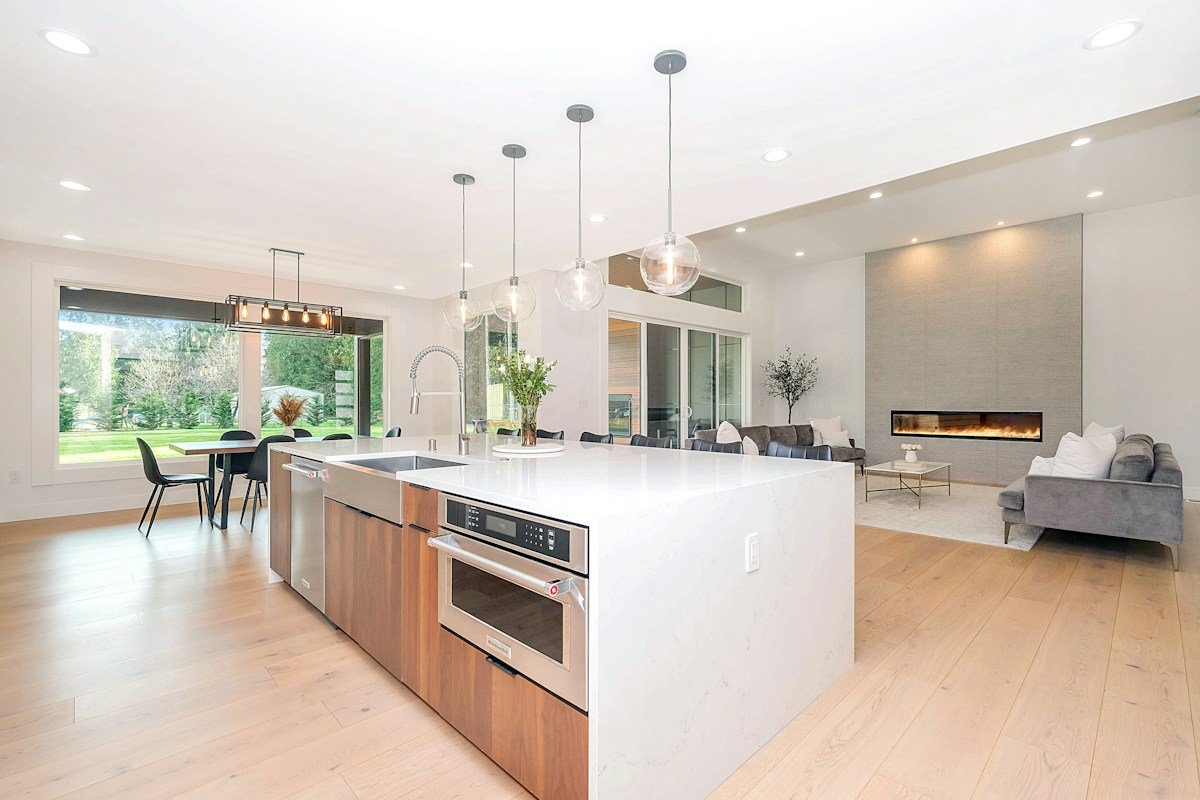
The modern residential kitchen island has transcended its humble origins as a secondary meal preparation prep table to become the undisputed social, culinary, and architectural epicenter of the contemporary home. In open-concept living arrangements, the kitchen island functions as a multi-purpose command center: a high-output workstation where searing pans land from the cooktop, an informal dining counter for bustling family breakfasts, an entertainment buffet for cocktail parties, and an impromptu homework station where acidic citrus juices, red wine, and coffee cups commingle daily. Across this sprawling horizontal expanse, the choice of countertop material dictates not only the aesthetic prestige of the entire living space, but its functional resilience under relentless thermal, chemical, and mechanical stress.
For more than three decades, homeowners and interior architects navigating high-end kitchen renovations have found themselves locked in an intense material debate: natural quarried granite versus engineered quartz stone. Both surfaces command premium status in residential real estate, both boast legendary physical hardness derived from crystalline silicon dioxide minerals, and both promise decades of enduring beauty. Yet beneath their polished, luxurious surfaces lie radically different geological origins, chemical compositions, and physical thermodynamic behaviors that dictate how they respond to hot Dutch ovens, spilled balsamic vinegar, and everyday family chaos.
Granite is a 100 percent natural plutonic igneous rock forged miles beneath the continental crust under immense subterranean heat and tectonic pressure over millions of years. It represents nature’s unfiltered geological majesty: offering completely unique mineral veining, crystalline feldspar depth, and thermal tolerance born in magma chambers. Engineered quartz, by contrast, is a triumph of advanced twentieth-century materials science: combining approximately ninety to ninety-three percent pulverized natural quartz crystals with seven to ten percent high-performance polymer resins and mineral pigments under intense vibro-compression vacuum technology. This engineered process eliminates natural stone fissures, yielding a non-porous, uniform surface that redefines stain defense.
Making an authoritative, scientifically informed decision between these two dominant countertop titans requires examining structural dimension stone standards from the Natural Stone Institute, material test methods from the American Society for Testing and Materials, food sanitation certifications from NSF International, environmental resin safety regulations from the United States Environmental Protection Agency, kitchen spatial planning directives from the National Kitchen and Bath Association, and geological mineral treatises from the United States Geological Survey. This exhaustive engineering guide delivers an uncompromising comparative analysis of geological mineralogy, thermal shock thermodynamics, fluid absorption physics, chemical stain resistance, cantilever overhang engineering, seam mechanics, food hygiene, and lifetime maintenance protocols.
Geological Mineralogy vs Engineered Composite Science: Plutonic Rock vs Bretonstone Technology
To understand how granite and quartz perform in a demanding residential kitchen, one must examine their fundamental molecular architectures and fabrication origins. Granite is classified geologically as an intrusive igneous rock. Deep within the Earth’s continental crust, molten magma cools at an extraordinarily slow rate over hundreds of thousands of years. This slow cooling allows individual mineral crystals to grow, interlock, and form an exceptionally dense crystalline matrix. True geological granite consists primarily of quartz (20 to 60 percent), alkali feldspar, plagioclase feldspar, and accessory minerals such as biotite mica and hornblende.
Because granite is a raw geological harvest extracted from open-pit mountain quarries across Brazil, India, Italy, and North America, every single quarried slab is an irreplaceable natural artifact. The dramatic sweeping veins, glittering mica flakes, and crystalline translucence reflect millions of years of geochemical sedimentation and volcanic shifting. However, this raw natural formation also means that granite contains natural microscopic micro-fissures, internal crystal boundaries, and varying degrees of capillary porosity that vary from quarry to quarry and even from one end of a slab to the other.
Engineered quartz, conversely, is an industrially manufactured composite material pioneered in the late twentieth century through patented Bretonstone technology developed by the Breton Corporation in Italy. Rather than relying on Mother Nature’s random mineral distribution, engineered quartz begins with pure natural quartz crystals: one of the hardest minerals on Earth (rated 7 on the Mohs hardness scale): crushed into specific graded aggregates ranging from fine powders to coarse granules. These quartz aggregates are meticulously blended with high-grade polyester or bio-based polymer resins, performance coupling agents (silanes), and mineral oxide pigments.
The uncured mixture is poured into massive slab molds and conveyed into a hydraulic vacuum press. Inside the press chamber, atmospheric air is completely evacuated while massive hydraulic rams apply over one hundred tons of pressure accompanied by high-frequency vibration (vibro-compression). This intense kinetic process collapses all internal voids, forcing the liquid polymer resin into every microscopic interstice between quartz crystals. The compacted slabs are then transferred into curing ovens heated to approximately 180 to 220 degrees Fahrenheit, where the polymer resins cross-link into a solid, impenetrable thermoset plastic matrix before being diamond-calibrated and polished.
Thermodynamics and Heat Resistance: Thermal Shock Physics and Resin Scorching
Heat resistance represents the most misunderstood physical property in kitchen countertop selection, and it is the domain where natural granite and engineered quartz diverge most dramatically. In an active family kitchen, hot cookware moves constantly between ranges, ovens, and island surfaces. Understanding how each material responds to extreme thermal gradients is vital for preventing catastrophic countertop cracking or irreversible discoloration.
Granite is an authentic thermodynamic champion. Having crystallized from molten magma at temperatures exceeding 1,200 to 1,800 degrees Fahrenheit, natural granite possesses an exceptionally high melting point and phenomenal thermal stability. Placing a scorching cast-iron skillet (heated to 450 to 500 degrees Fahrenheit) or a boiling stockpot directly onto a polished granite countertop will not scorch, melt, burn, or chemically alter the stone. The mineral crystals easily withstand direct conductive contact with extreme culinary heat.
However, even with granite, thermal shock remains a physical consideration. Thermal shock occurs when a localized area of a cold stone slab experiences rapid, extreme thermal expansion while the surrounding mass remains cold. If an ice-cold granite countertop in a winter cabin suddenly receives a 500-degree Dutch oven, the localized differential expansion can induce shear stresses that propagate along an existing natural fissure, resulting in a hairline thermal crack. While rare in high-grade granite slabs, using a trivet or silicone heat pad is still recommended as an abundance of caution by the Natural Stone Institute.
Engineered quartz, by contrast, suffers from a definitive thermodynamic Achilles heel: its polymer resin binder. While the 93 percent quartz aggregate in the slab can easily tolerate extreme heat, the seven percent polymer resin that binds the crystals together is an organic plastic compound. Modern polyester and acrylic resins begin to soften, undergo thermal degradation, and scorch at temperatures between 150 and 300 degrees Fahrenheit (65 to 150 degrees Celsius).
If a homeowner places a hot frying pan, a cookie sheet fresh from a 425-degree oven, or even an electric countertop crockpot directly onto an engineered quartz island without a protective trivet, the concentrated conductive heat triggers a chemical reaction within the resin. The resin turns yellow or dark brown, producing an unsightly, permanent burn ring known in the stone fabrication trade as resin scorch. Unlike surface stains, resin scorch is a permanent chemical alteration of the plastic polymer matrix; it cannot be buffed out, bleached, or cleaned with solvents. Repairing a scorched quartz countertop requires grinding away the top layer with diamond pads, filling the depression with colored UV-curing epoxy, or cutting out and replacing the entire slab section.
Porosity, Fluid Dynamics, and Stain Defense: ASTM C97 Metrics and Chemical Vulnerability
While granite dominates in thermodynamic tolerance, engineered quartz claims overwhelming supremacy in fluid dynamics, chemical stain immunity, and daily cleanability. In a busy family kitchen where lemon juice, red wine, turmeric, dark berries, cooking oil, and vinegar are regularly splashed across island surfaces, a material’s fluid absorption rate dictates whether a spill wipes away effortlessly or leaves a permanent blotch.
Fluid absorption in dimension stone is measured scientifically under ASTM C97 (Standard Test Methods for Absorption and Bulk Specific Gravity of Dimension Stone). In this standardized test, dried stone specimens are completely submerged in distilled water for forty-eight hours to measure percentage weight gain from liquid absorption into internal pores.
Natural granite is an inherently porous material. Across different geological classifications, natural granite exhibits water absorption rates ranging from 0.05 percent (for ultra-dense black norites like Absolute Black) to over 0.40 percent for lighter, exotic granites rich in feldspar and porous mica (such as Kashmir White or Colonial Gold). The internal structure of granite contains an intricate network of microscopic capillaries and interconnected pore spaces. When a low-viscosity liquid like olive oil, melted butter, or red wine sits on an unsealed granite surface, capillary action draws the liquid deep into the crystalline stone matrix within minutes. Once oil penetrates these deep pores, it darkens the stone from within, creating a stubborn dark shadow that can only be extracted using specialized chemical poultices.
Furthermore, many natural stones sold commercially as “granite” are actually geological dolomites, marbles, or gneiss containing calcium carbonate minerals. When acidic culinary liquids: such as lemon juice, tomato sauce, or white vinegar: spill onto these stones, the acid reacts chemically with the calcium carbonate, dissolving the polished surface in a process known as acid etching. Acid etching leaves a dull, chalky, unreflective mark on the stone that cannot be washed away and requires professional diamond honing to restore.
Engineered quartz, by contrast, boasts an ASTM C97 water absorption rate of less than 0.02 percent: practically zero. Because the vibro-compression manufacturing process fills every microscopic interstice with solid polymer resin under extreme vacuum, engineered quartz is completely non-porous. There are zero capillaries, micro-voids, or open pores for liquids to enter. Spilled red wine, soy sauce, mustard, coffee, and balsamic vinegar can sit on a quartz countertop for twenty-four hours without penetrating the surface; every molecule of liquid wipes clean away with a damp microfiber cloth and mild soap.
However, quartz has its own distinct chemical vulnerabilities. While impervious to common food acids, the polymer resins in engineered quartz are sensitive to harsh, high-pH alkaline chemicals and aggressive industrial solvents. Cleaners containing potassium hydroxide, sodium hydroxide (oven cleaners), paint strippers, methylene chloride, or concentrated chlorine bleach can chemically degrade and dull the polymer surface. Additionally, continuous exposure to direct outdoor ultraviolet sunlight will cause the polymer resins in quartz to oxidize, turn yellow, and become brittle, making quartz strictly an indoor countertop material.
Sealing Chemistry: Penetrating Impregnating Sealers vs Zero-Maintenance Quartz
The contrasting porosity profiles of granite and quartz dictate radically different long-term maintenance realities. For homeowners who demand zero-maintenance simplicity, this distinction is often the deciding factor in their countertop selection.
Because natural granite is porous, it requires regular chemical sealing to maintain its stain defense. Countertop sealers do not form a plastic film on top of the stone (which would peel and look artificial); instead, they utilize penetrating impregnating chemical sealers formulated with fluoropolymers, organosilanes, or siloxanes suspended in solvent or water carriers. These microscopic fluorochemical molecules penetrate deep into the stone’s capillary pores, bonding to the interior walls of the mineral channels.
Once cured, the sealer dramatically lowers the surface energy of the stone pores, causing water and oil molecules to bead up on top of the countertop through surface tension rather than being sucked inward. However, penetrating sealers do not last forever. Everyday kitchen friction, wiping with dish soap, and exposure to mild cleaners gradually break down the protective barrier over time. Consequently, natural granite countertops must be chemically re-sealed every twelve to twenty-four months (lighter, highly porous granites may require sealing every six to nine months).
Testing whether your granite countertop needs re-sealing is simple: the classic Water Drop Test. Place several droplets of tap water onto high-traffic areas of the island (especially around the sink and food prep zone) and let them sit for fifteen minutes. If the water beads tightly on the surface, the sealer remains fully intact. If the water flattens out and the stone beneath darkens, moisture is penetrating the capillaries, indicating that the sealer has deteriorated and a fresh coat of penetrating fluoropolymer sealer must be applied immediately.
Engineered quartz, by absolute contrast, requires ZERO sealing: not at the time of installation, not after five years, not ever throughout its entire thirty-year lifespan. Because quartz contains no internal pores or capillary pathways, applying an impregnating stone sealer is not only unnecessary, it is harmful. The sealer cannot penetrate the non-porous resin surface; it will simply pool on top of the quartz, dry into a hazy, streaky, sticky chemical film, and attract dirt like a magnet. For active households that prioritize zero-maintenance living, quartz provides unmatched peace of mind.
Structural Engineering and Island Cantilevers: Overhang Limits and Support Brackets
The modern kitchen island almost invariably incorporates a seating overhang: a casual breakfast bar where family members and guests pull up counter-height barstools. Engineering this cantilevered overhang correctly is a matter of critical structural safety. Countertop slabs are extraordinarily heavy: a standard 3-centimeter (1.25-inch) thick granite or quartz slab weighs between eighteen and twenty-two pounds per square foot! A large eight-by-four-foot kitchen island slab weighs over six hundred pounds.
When this massive weight cantilevers out past the edge of the kitchen island base cabinetry without adequate support, severe bending and shear stresses are induced along the fulcrum line. If a teenager leans heavily on the edge or a child climbs onto the overhang, unreinforced stone can suddenly snap along a fracture line, causing hundreds of pounds of stone to crash down onto occupants’ legs.
Natural Stone Institute standards dictate strict cantilever limits based on slab thickness. For standard 3cm (1.25-inch) granite slabs, an unsupported overhang must never exceed ten to twelve inches. Any overhang exceeding twelve inches mandates engineered structural support. For 2cm (3/4-inch) granite slabs, the limit is even stricter: an unsupported overhang must never exceed six to eight inches without continuous plywood sub-top decking and structural metal corbels.
Engineered quartz exhibits superior flexural strength compared to natural granite. Thanks to its ductile polymer resin matrix, quartz can absorb higher tensile and bending stresses without cracking (flexural strength of quartz typically ranges from 45 to 65 MPa, compared to 10 to 20 MPa for natural granite). Consequently, 3cm quartz can safely cantilever up to twelve to fourteen inches without corbels, provided at least two-thirds of the total slab width remains fully supported by the base cabinets.
For deep, luxurious overhangs spanning fifteen to eighteen inches (ideal for comfortable adult leg clearance), both granite and quartz require concealed heavy-duty steel support brackets. Fabricators install low-profile, gusseted steel cantilever plates (typically 1/4-inch or 3/8-inch thick cold-rolled structural steel) screwed directly into the island cabinet frames every eighteen to twenty-four inches. These steel plates are routed flush into the top of the cabinet stretchers, remaining completely invisible from view while easily supporting up to three hundred pounds of downward point load per bracket.
Edge Profiling and Impact Resistance: Chipping Vulnerability and CNC Profiles
The perimeter edge profile of a kitchen island countertop serves dual purposes: it establishes the stylistic character of the cabinetry and dictates the countertop’s resistance to accidental mechanical chipping. In high-traffic family kitchens, heavy pots, stainless-steel pans, and heavy grocery bags are constantly swung around island corners.
The most vulnerable edge profile in any stone countertop is the sharp Eased or Pencil Edge (a 90-degree square edge with only a microscopic 1/16-inch bevel). When a heavy cast-iron pot or ceramic casserole dish strikes a sharp 90-degree stone corner, the concentrated kinetic impact concentrates immense shear stress on the brittle edge, effortlessly knocking out an unsightly chip of stone.
To maximize impact durability, architects specify rounded, radiused edge profiles crafted on computerized CNC waterjet machines. A Half-Bullnose, Demi-Bullnose, or 1/4-inch Radius Edge curves the top corner of the stone, allowing impact forces to glance harmlessly off the rounded surface rather than concentrating on a sharp point. Rounded edges also feel substantially softer and more comfortable against human forearms when leaning on the island.
Comparing impact resistance between materials reveals that engineered quartz is noticeably more forgiving than natural granite. The polymer resin matrix in quartz provides microscopic elasticity that absorbs minor impacts without shattering. Natural granite, while exceptionally hard against surface scratching, has rigid crystalline cleavage planes: meaning a sharp direct blow from a metal hammer or dropped cast-iron lid is more likely to fracture off a crystal along its natural cleavage plane. If chipping does occur on either material, professional stone restoration technicians can fill the void with color-matched UV-curing methacrylate epoxy, sand the repair flush with diamond polishing pads, and restore a smooth finish.
Seam Engineering, Color Uniformity, and Vein Matching
Because contemporary kitchen islands frequently span massive dimensions: often ten to twelve feet in length and five to six feet in width: single stone slabs may not always cover the entire area without a seam. How seams are engineered and how visual patterns align across the surface dictate whether an island looks like a bespoke work of fine art or a clumsy, fractured puzzle.
Engineered quartz offers phenomenal color uniformity and pattern predictability. Because quartz is manufactured in controlled factory batches with digital computer modeling, slabs within the same production dye lot display virtually identical background hues and mineral distributions. For modern waterfall island designs: where the countertop flows seamlessly over the side of the island down to the finished floor at a 45-degree mitered angle: quartz manufacturers produce dedicated Bookmatched Slabs (Mirror-Image Slabs). In bookmatched pairs, the sweeping marble-look veins on Slab A mirror perfectly with Slab B, creating a continuous, flowing ribbon of veining that cascades down the waterfall edge with breathtaking precision.
Natural granite presents a captivating yet challenging aesthetic journey. Because every natural granite slab is an organic original, finding two identical slabs is impossible. In large L-shaped islands or installations requiring seams, skilled stone fabricators must perform digital template vein mapping: photographing the slabs with high-resolution digital cameras and using specialized CAD software (such as Slabsmith) to digitally match vein trajectories before making a single cut. Seams in natural granite are glued using two-part structural epoxy custom-tinted with mineral pigments to match the surrounding stone, tightened using pneumatic seam-setter suction clamps, and leveled flush to within 1/64 of an inch.
Food Safety, NSF/ANSI 51 Sanitation, and Bacterial Defense
In modern culinary culture, the kitchen island is where fresh dough is kneaded, raw chicken is trimmed, and fresh vegetables are chopped. Hygiene and bacterial mitigation are paramount concerns for every health-conscious homeowner.
Engineered quartz is recognized worldwide as the gold standard for hygienic residential food preparation. Leading quartz brands (including Cambria, Silestone, Caesarstone, and Viatera) carry prestigious NSF/ANSI 51 Certification from NSF International. NSF/ANSI 51 evaluates materials used in commercial food equipment, confirming that the surface is completely non-porous, non-toxic, and incapable of harboring pathogenic bacteria, viruses, or fungal mold colonies. Because quartz has zero internal pores or microscopic fissures, raw chicken juices, salmonella, and E. coli bacteria cannot penetrate beneath the surface; a quick wipe with warm soapy water leaves the surface 100 percent sanitized and clean.
Natural granite can also provide a safe food preparation surface, but its bacterial resistance depends entirely on the integrity of its penetrating sealer. If granite is unsealed or poorly maintained, the microscopic crevices and porous capillary channels can trap microscopic moisture and organic food particles, creating sheltered micro-environments where bacteria and mold can proliferate. For homes with granite countertops, regular disinfection using pH-neutral antimicrobial stone cleaners and disciplined annual sealing are mandatory to maintain food preparation hygiene.
Undermount Sink Cutouts, Mechanical Anchors, and Plumbing Dynamics
Integrating a modern undermount sink into a granite or quartz kitchen island introduces significant mechanical and structural stress. In contemporary kitchens, deep single-basin stainless steel or heavy fireclay apron-front sinks are preferred. When filled with warm water, heavy cast-iron cookware, and fitted with a high-torque continuous-feed garbage disposal, a loaded kitchen sink easily weighs between one hundred and twenty and one hundred and eighty pounds suspended beneath the countertop plane.
Relying solely on adhesive silicone glue to support this dead weight is a dangerous installation error that leads to catastrophic sink detachment. In granite and quartz installations, fabricators must mechanically anchor the sink rim to the stone. With natural granite, fabricators drill shallow blind pilot holes into the underside of the slab and install brass expansion inserts or threaded brass anchors secured with structural two-part epoxy, fastening zinc-plated steel sink clips to compress the sink flange against the stone.
For engineered quartz, fabricators often prefer structural under-cabinet steel support harnesses (such as the Sink Setter or Hercules Universal Sink Harness). These heavy-duty steel rails span across the cabinet side walls, transferring 100 percent of the downward sink and water weight directly into the wooden cabinetry rather than pulling down on the stone cutout. Furthermore, plumbers must strictly utilize 100 percent neutral-cure silicone sealant along the sink rim; standard oil-based plumber’s putty must never be used on porous natural granite, as the unrefined linseed oils in the putty will leach permanently into the stone around the faucet holes, leaving dark, greasy stains that cannot be extracted.
Radon Gas Emission and Gamma Radiation Geology: Scientific Facts vs Myths
Over the past two decades, sensationalized media reports have occasionally raised alarm regarding whether natural granite countertops emit dangerous levels of cancer-causing radon gas or penetrating gamma radiation. Addressing this geochemical reality with empirical data from the Environmental Protection Agency and the Health Physics Society is essential for homeowner peace of mind.
Because granite is a naturally occurring igneous rock derived from the Earth’s continental crust, it contains trace, parts-per-million concentrations of naturally occurring radioactive elements: specifically uranium-238, thorium-232, and potassium-40. As uranium decays over billions of years, it produces radon-222, an odorless, radioactive noble gas that can escape through microscopic pores into ambient air.
However, exhaustive scientific testing conducted by the EPA, the Natural Stone Institute, and independent university radiation laboratories confirms that the vast majority of commercial granite countertops emit negligible levels of radon that are completely indistinguishable from normal ambient outdoor background radiation. The average home’s natural indoor air exchange rate flushes out microscopic traces of radon continuously. The EPA estimates that an average granite countertop contributes less than 0.1 to 0.25 picocuries of radon per liter of indoor air: a fraction of the EPA’s indoor action threshold of 4.0 pCi/L. Engineered quartz, being manufactured from commercially purified crushed quartz sand, exhibits even lower, near-zero radiation signatures. Both materials are entirely safe for residential installations.
Environmental Lifecycle and Fabrication Health: Silica Safety from Quarry to Home
Evaluating the environmental and human health footprint of kitchen countertops requires examining the complete industrial lifecycle: from extraction and factory synthesis to occupational fabrication safety in stone fabrication shops.
Natural granite is a raw geological harvest. Quarrying requires heavy mechanical diamond wire saws, hydraulic excavators, and transoceanic shipping of massive twelve-ton raw blocks from international quarries in Brazil, India, and Norway to processing facilities. While the embodied transportation energy of quarried granite is substantial, raw granite requires zero synthetic petrochemicals to produce, produces zero chemical off-gassing, and represents a 100 percent recyclable, inert mineral product that lasts for centuries without ending up in landfills.
Engineered quartz eliminates large-scale mountain block quarrying by utilizing abundant quartz sand and byproduct gravel from existing aggregate mines. However, the production of engineered quartz requires petroleum-derived unsaturated polyester resins and chemical curing agents. In recent years, occupational safety agencies worldwide (including OSHA in the United States and Safe Work Australia) have placed intense scrutiny on the fabrication of engineered stone due to respirable crystalline silica (RCS). Engineered quartz contains up to 90 to 93 percent crystalline silica: substantially higher than natural granite (which contains 20 to 45 percent silica).
When stone fabricators cut, grind, or polish quartz slabs dry without water suppression, millions of microscopic silica dust particles become airborne. If inhaled, these particles cause silicosis: an irreversible, debilitating lung disease. Responsible modern stone fabricators strictly operate computerized CNC bridge saws and water-recycled automated machinery, ensuring that 100 percent of cutting and edge polishing occurs under continuous water spray. Once the finished, polished quartz or granite countertop is delivered and installed in your residential kitchen, it is completely inert, solid, and poses zero silica dust risk to homeowners.
Comprehensive Kitchen Island Countertop Comparison Matrix
To provide a clear, rigorous comparative overview of natural granite and engineered quartz across all critical technical, thermodynamic, and financial parameters, the following engineering matrix summarizes the verified performance metrics of both materials. Reviewing these verified data points enables homeowners, architects, and remodelers to make a confident, perfectly matched selection for their culinary lifestyle.
Analyzing these parameters confirms that while natural granite offers unrivaled volcanic heat resistance and one-of-a-kind geological character, engineered quartz provides unmatched non-porous stain defense, zero-maintenance simplicity, and superior impact toughness. Evaluating your cooking habits, family dynamics, and tolerance for routine maintenance dictates your ideal choice.
| Performance Attribute | Natural Quarried Granite | Engineered Composite Quartz | Practical Winner & Rationale |
|---|---|---|---|
| Heat Resistance (Direct Contact) | Extreme (Tolerates 1,200°F+; hot pans safe) | Moderate (Resin scorches above 150–300°F) | Granite (Volcanic thermal stability) |
| Porosity & Water Absorption (ASTM C97) | 0.05% to 0.40% (Inherently porous) | < 0.02% (Completely non-porous) | Quartz (Zero capillary absorption) |
| Stain & Food Acid Defense | Vulnerable if unsealed (Acid etching risk) | Immense (Wine, lemon, turmeric wipe off) | Quartz (Impenetrable resin barrier) |
| Sealing & Periodic Maintenance | Mandatory re-sealing every 12 to 24 months | Zero sealing required ever | Quartz (True zero-maintenance) |
| Mohs Mineral Hardness | 6 to 7 (Highly scratch resistant) | 7 (Exceptional scratch resistance) | Tie (Both resist everyday knife marks) |
| Flexural Strength & Impact Resistance | Brittle crystalline structure (Edge chipping risk) | High resin elasticity (Absorbs pot impacts) | Quartz (Resin flexural toughness) |
| Pattern & Color Consistency | 100% Unique natural variation (Hard to match) | Uniform batches; bookmatched waterfall slabs | Depends on taste (Organic vs Controlled) |
| Outdoor & UV Sunlight Stability | 100% UV stable (Never fades or yellows) | Vulnerable to UV (Resins yellow and oxidize) | Granite (Ideal for outdoor kitchens) |
Before committing to your countertop contract, review these essential answers to frequently asked technical and practical questions to ensure your investment delivers flawless daily performance for decades to come.
Frequently Asked Questions About Kitchen Island Countertops
Can you place a hot pan directly onto a quartz countertop?
No, you should never place hot pots, frying pans, or baking dishes directly onto engineered quartz. While quartz mineral aggregates can tolerate extreme heat, the polymer resins binding the slab begin to break down and scorch at temperatures between 150 and 300 degrees Fahrenheit, leaving permanent yellow or dark brown burn rings that cannot be washed away.
Does granite really need to be sealed every year?
Most residential granite countertops require re-sealing every twelve to twenty-four months. Highly dense, dark granites (such as Absolute Black) have extremely low porosity and may only need sealing every three to five years, while porous, light-colored granites require sealing every six to twelve months. Perform the simple fifteen-minute water drop test to check your sealer condition.
Will red wine or turmeric permanently stain quartz?
No, high-grade engineered quartz is completely non-porous with an ASTM C97 water absorption rate below 0.02 percent. Red wine, turmeric, dark berries, and balsamic vinegar sit strictly on the surface and cannot penetrate into the slab. Even dried food spills wipe clean away with a damp microfiber cloth and mild dish soap.
Which material is better for kitchen island waterfall edges?
Engineered quartz is generally superior for waterfall island edges because manufacturers produce digitally synchronized bookmatched slab pairs. This allows the sweeping marble-look veins to turn the 45-degree mitered corner and cascade down to the floor in an unbroken, continuous visual line. Natural granite can also be bookmatched, but requires rare and expensive consecutive slab cuts.
How far can a kitchen island countertop overhang without support brackets?
Under Natural Stone Institute guidelines, standard 3cm (1.25-inch) granite slabs can safely overhang up to ten to twelve inches unsupported. Engineered quartz can cantilever up to twelve to fourteen inches due to its higher flexural strength. For deeper overhangs spanning fifteen to eighteen inches, heavy-duty 1/4-inch concealed structural steel brackets are mandatory.
Can you cut food directly on granite and quartz countertops?
While both granite and quartz are hard enough (Mohs hardness 6 to 7) to resist scratching from kitchen knives, cutting directly on the stone is strongly discouraged. The extreme mineral hardness will instantly dull and ruin expensive steel knife blades. Always use wooden or composite cutting boards to preserve your culinary cutlery.
How do you clean and disinfect quartz countertops safely?
Clean quartz countertops daily using warm water, a non-abrasive microfiber cloth, and mild pH-neutral dish soap. Avoid abrasive scouring pads, high-pH oven cleaners, bleach, or ammonia-based window sprays, as harsh chemicals can chemically degrade and dull the polymer resin surface.
Is quartz or granite more expensive per square foot?
Both materials occupy similar price ranges: typically seventy to one hundred and seventy-five dollars per square foot installed. Standard entry-level granite is often slightly less expensive than entry-level quartz, but rare exotic granites with dramatic mineral veining can exceed two hundred and fifty dollars per square foot, making them significantly more expensive than premium quartz.
Is engineered quartz toxic or dangerous in the home?
Once installed in your home, engineered quartz is completely non-toxic, chemically inert, and emits virtually zero volatile organic compounds (VOCs). Leading brands are certified by NSF International (NSF/ANSI 51) for food contact and GREENGUARD Gold for indoor air quality. Health risks related to respirable crystalline silica occur strictly during factory dry-cutting and fabrication, requiring industrial wet-cutting controls for worker safety.
Conclusion: Selecting the Ultimate Kitchen Island Anchor
The kitchen island countertop is more than a culinary preparation surface; it is the enduring stage upon which decades of family life, celebration, and conversation unfold. If your culinary style centers on high-heat searing, cast-iron cooking, and an appreciation for nature’s raw, unrepeatable volcanic beauty, natural quarried granite remains an unmatched organic marvel. If your priority is effortless daily living, zero periodic sealing, and absolute immunity against red wine, lemon juice, and bacterial infiltration, engineered quartz represents the pinnacle of modern materials science. By respecting thermal limits, engineering robust structural overhangs, and selecting thoughtful edge profiles, you will create a luxurious kitchen centerpiece that serves your home with distinction for generations.