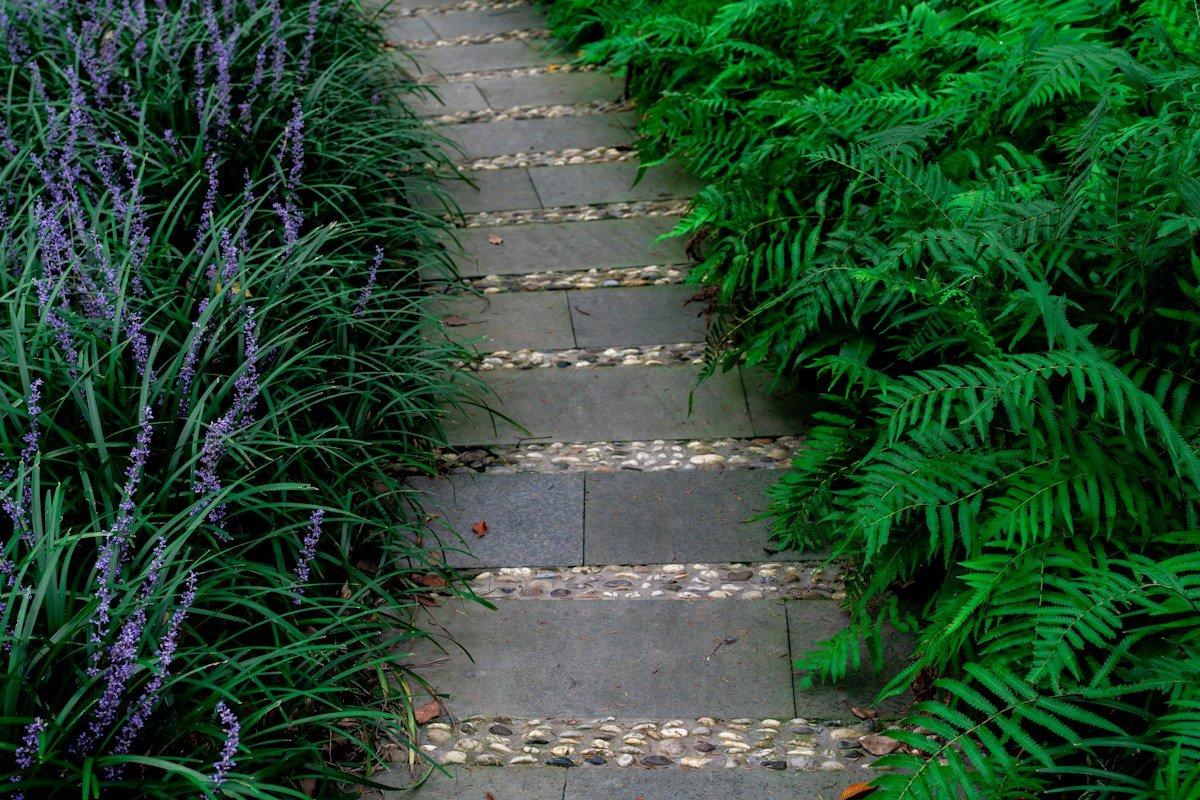
Circulation design forms the architectural skeleton of any residential landscape. When walking through a thoughtfully planned garden, the pathway beneath your feet directs your visual focus, establishes physical cadence, and connects distinct outdoor living destinations. While continuous poured concrete slabs and uniform interlocking pavers provide sterile utility, they often detach a home from its natural surroundings. In modern residential design, the combination of raw natural flagstone steppers and loose pea gravel aggregates creates a sensory experience that celebrates organic textures, permeable drainage, and timeless craft.
The timeless appeal of a dry-laid flagstone and gravel pathway lies in its balance between formal structure and relaxed nature. Massive, cleft-faced stone slabs deliver solid, level footing underfoot, while rounded pea gravel fills interstitial voids with a soft crunch that delights the auditory senses. As morning shadows wash across irregular stone edges, the natural clefts, iron mineral veining, and warm sediment colors harmonize effortlessly with surrounding architectural siding, modern board-formed concrete retaining walls, and lush perennial plantings. Unlike rigid mortared walkways that crack under winter frost heave, dry-laid aggregate systems adapt flexibly to subterranean ground movement.
Constructing a durable, long-lasting garden walkway demands sound geotechnical engineering, precise aggregate grading, and meticulous stone setting. Drawing upon design standards established by the American Society of Landscape Architects, hardscape installation benchmarks from the Concrete Masonry and Hardscapes Association, aggregate classifications from the National Stone Sand and Gravel Association, and geological material assessments from the United States Geological Survey, this master manual provides an authoritative roadmap for planning, excavating, and building an enduring flagstone garden path.
Beyond visual elegance and functional circulation, natural stone pathways contribute significantly to biophilic design principles that enhance emotional well-being. Modern residential architecture frequently features smooth, synthetic materials: drywall, glass, composite decking, and manufactured vinyl: that isolate human perception from natural geological variation. Introducing authentic quarried stone into daily outdoor circulation reconnects residents with ancient earth formations. Pausing on a broad bluestone landing, listening to the gentle rustle of ornamental grasses and the textured crunch of river gravel, slows human breathing and reduces urban psychological stress, converting a simple walk to the mailbox into a mindful, restorative ritual.
Across the detailed sections below, you will explore the full spectrum of walkway construction. We examine excavation depths and subgrade compaction, drainage slope dynamics, flagstone quarry geology, ergonomic stride spacing formulas, gravel sieve grading, heavy-gauge steel edge restraints, and low-voltage illumination. Whether you are creating a meandering garden path through a woodland sanctuary or establishing a bold, modern entrance walkway for an urban home, these professional hardscaping methods will elevate your landscape into a functional, enduring masterpiece.
Geotechnical Site Preparation: Excavation Depth and Subgrade Compaction
Every long-lasting stone pathway relies on invisible structural engineering completed below ground level. A frequent flaw in DIY hardscape projects is laying flagstones directly on cleared turf or thin layers of sand without adequate subgrade excavation. Over two or three seasons, uncompacted soils settle unevenly under seasonal rainfall and foot traffic. Flagstones begin to wobble, gravel disappears into underlying mud, and trip hazards emerge. Proper geotechnical preparation creates an unyielding subterranean foundation that supports thousands of pounds of foot traffic without settling.
The first critical metric is determining excavation depth based on soil composition and regional climate. For pedestrian garden walkways in non-freeze climates, a total excavation profile of five to six inches is standard: comprising three inches of compacted aggregate base, one inch of bedding sand or stone fines, and one and a half to two inches of flagstone thickness. In northern cold climates subject to deep winter frost penetration, excavation depths should expand to eight to ten inches. Digging down below the organic topsoil layer down to undisturbed subsoil prevents frost lenses from expanding and dislodging stones during winter freeze-thaw cycles.
Subgrade compaction requires mechanical force rather than simple hand tamping. After stripping all organic turf grass, roots, and loose topsoil, rake the subgrade smooth while maintaining a transverse cross-slope of one to two percent (one-eighth to one-quarter inch per linear foot) pitched away from home foundations. This subtle grade prevents water from pooling beneath the walkway. Run a gas-powered vibrating plate compactor over the native subsoil in overlapping passes, achieving a minimum ninety-five percent standard Proctor soil compaction density. In heavy clay soils, moisten the ground lightly prior to compaction to lubricate soil particles without turning the subgrade into slippery slurry.
Installing a commercial woven geotextile separation fabric over the compacted subgrade is essential for long-term pathway stability. Many novices mistakenly install flimsy perforated black weed barrier plastic, which tears easily under heavy stone aggregate and traps water. A high-tensile, non-woven or woven needle-punched polypropylene geotextile fabric acts as a permanent structural separator. It prevents angular base aggregates from sinking into soft underlying clay while allowing subsurface groundwater to drain downward naturally into the aquifer, preserving the load-bearing integrity of your base layers.
Geotextile fabric overlaps and pinning details must adhere to strict civil engineering standards. When spanning wide pathway trenches or joining fabric rolls, maintain a minimum overlap of twelve to eighteen inches along all seams. Pin the fabric securely to the excavated subgrade using heavy six-inch carbon steel landscape staples driven at three-foot intervals with a rubber mallet. Ensure the fabric extends up the sidewalls of the excavation trench to ground level, creating a complete separation envelope that prevents perimeter dirt and mud from washing laterally into clean gravel bedding layers.
Trench excavation must also accommodate lateral edge restraints. Ensure your excavation footprint extends four to six inches wider than the planned finished pathway surface on both sides. This widened shelf provides an anchored shoulder for steel stakes and perimeter restraints, preventing the edges of the pathway from blowing out or collapsing outward under lateral pedestrian pressure.
Base Aggregate Engineering: Crushed Stone, Bedding Fines, and Drainage Layers
The structural load-bearing capacity of a flagstone and gravel pathway depends entirely on the quality and grading of its aggregate base. Dumping unwashed gravel directly into an excavated trench invites disaster: loose stones will continuously roll beneath foot traffic, shifting like ocean sand and making walking unsteady. A firm, walkable path requires a dense, interlocked aggregate matrix topped with a permeable bedding layer.
The foundation core requires dense-graded aggregate, commonly known in the building trade as road base, crusher run, or three-quarter-inch minus aggregate. This material combines angular fractured rocks ranging from three-quarter-inch gravel down to microscopic mineral dust. When compacted with a plate compactor, the jagged stone edges lock tightly together like puzzle pieces, while fine mineral dust fills all internal voids. The result is a rock-hard, monolithic structural base that mimics poured concrete in stability while remaining semi-permeable to rainwater.
Base installation must occur in controlled lifts. Never dump six inches of base aggregate into a trench and attempt to compact it in a single pass, as compactor vibration only penetrates the top two to three inches, leaving loose, uncompacted material below. Instead, spread base material in even two-inch layers, lightly spray with a garden hose to reach optimum moisture content, and run the vibrating plate compactor over the surface three times before adding the next lift. Check base flatness using a ten-foot aluminum straightedge, eliminating low depressions that could collect water.
Above the compacted road base sits the bedding layer, which provides a workable cushion for leveling irregular flagstone backs. Coarse concrete sand (ASTM C33 specification) or decomposed granite screenings graded from one-eighth-inch down to stone dust serve as ideal bedding media. Avoid fine masonry sand or rounded beach sand, which behaves like fluid ball bearings when wet. A smooth, screeded one-inch bed of coarse concrete sand allows installers to adjust each stone’s elevation individually, seating stones firmly without wobbling.
In sites with excessive water runoff or poor natural percolation, incorporating an open-graded aggregate base provides superior drainage. Utilizing clean, washed Number 57 crushed stone (one-half to one-inch fractured gravel without fines) creates an open reservoir structure beneath the pathway. This open-graded matrix rapidly collects heavy storm runoff, holding the water beneath the stones until it can slowly infiltrate the surrounding earth, eliminating surface puddles and muddy path perimeters.
Flagstone Quarry Geology: Bluestone, Sandstone, Slate, and Quartzite
Flagstone is a generic landscape trade term encompassing various sedimentary and metamorphic rocks that split naturally along planar bedding layers into flat architectural slabs. Selecting the right stone requires evaluating regional geology, climate resistance, slip resistance, and aesthetic coloration. Each geological variety presents distinct structural characteristics that dictate installation technique and long-term durability.
Pennsylvania Bluestone is one of the most widely specified architectural flagstones in North America. A dense, feldspathic sandstone quarried in northeastern Pennsylvania and southern New York, bluestone exhibits exceptional compressive strength and weather resistance. Available in thermal finishes (sawn smooth and heat-treated to create an even, non-slip textured face) or natural cleft finishes (split naturally along geological seams), bluestone features cool blue-grey tones alongside full-color ranges with warm rust, lilac, and olive mineral accents. Bluestone performs reliably in severe freeze-thaw climates, resisting surface spalling and winter cracking.
Arizona Sandstone and Colorado Red Sandstone offer warm, earthy palettes ideal for southwestern, Mediterranean, and modern farmhouse landscapes. Characterized by soft tan, desert gold, and deep terracotta hues, these sedimentary stones feel warm underfoot and provide high traction even when wet due to their granular silica composition. Sandstone is softer and more porous than quartzite, making it easier to shape and trim on site with a brick hammer and carbide chisel. However, in regions with harsh winter freezes, sandstone must be sealed periodically or selected in minimum two-inch thicknesses to prevent water absorption and frost flaking.
Quartzite represents the apex of flagstone hardness and compressive resilience. Formed when quartz-rich sandstone undergoes intense tectonic heat and pressure, quartzite possesses a crystalline structure denser than granite. Stones such as Idaho Silver Quartzite or Golden Quartzite shimmer with microscopic mica flakes, reflecting ambient natural light. Quartzite is impervious to water penetration, highly resistant to staining and chemical de-icing salts, and virtually indestructible under foot traffic, making it an extraordinary choice for high-traffic pathways.
Slate provides dramatic visual contrast with its dark charcoal, plum, and deep emerald green cleft surfaces. Formed from metamorphosed shale, slate splits cleanly into thin, uniform sheets. However, caution must be exercised when specifying slate for outdoor paths in freezing regions. Low-grade commercial slates contain microscopic clay veins that absorb moisture, causing the stone to delaminate in thin layers over winter. Always source hard, exterior-rated roofing-grade slates with low water absorption metrics when designing garden walkways.
Layout Geometries and Ergonomic Stride Cadence Physics
A garden path should invite effortless, comfortable movement. When stepping stones are spaced erratically or positioned too far apart, pedestrians are forced to alter their natural walking stride, staring at their feet rather than enjoying the surrounding garden. Translating human ergonomic movement into stone placement requires understanding walking cadence, sight lines, and proportional stone massing.
The golden rule of garden stepping stone placement is the twenty-four-to-twenty-six-inch center-to-center measurement. The average human walking stride spans approximately twenty-six inches from the center of one foot to the center of the next. When setting flagstone slabs in a pea gravel bed, measure from the physical center of each stone to the center of the subsequent stone. Adhering to this ergonomic distance creates a natural, rhythmic walking flow that feels comfortable for children, adults, and elderly visitors alike.
Individual stone dimensions dictate stability and visual presence. Avoid small, fragmented stone pieces measuring less than fourteen inches in diameter, as small stones tilt underfoot and look chaotic in loose gravel fields. Instead, specify large anchor slabs measuring between twenty and thirty-six inches across, with a minimum thickness of one and a half to two inches. Substantial flagstones possess significant mass: often weighing forty to one hundred pounds each: preventing shifting and wobble without requiring mortar or wet concrete.
Pathway alignment determines the psychological pace of the outdoor space. A straight, linear walkway creates a sense of purpose and efficiency, directing visitors quickly toward a focal destination such as a front door or garden pavilion. Conversely, gentle curvilinear paths encourage slower, contemplative strolls, revealing hidden planting vignettes, water features, and seating alcoves around soft bends. When laying out curved paths, use flexible garden hoses or marking paint to establish smooth sweeping arcs, ensuring path widths remain consistent: at least thirty-six inches for single-file passage, and forty-eight to sixty inches for two individuals walking side by side.
Universal accessibility standards provide valuable engineering guidelines for residential landscape paths. While completely loose gravel can impede narrow wheelchair tires, designing with broad thermal-finished bluestone slabs spaced with tight one-inch gravel reveals creates a continuous firm plane that complies with accessible slope standards. Ensure the longitudinal slope of the walkway never exceeds a five percent grade (a one-foot vertical rise per twenty linear feet) without incorporating intermediate flat resting landings. Where existing topography forces steeper grades, build low stone riser steps rather than an excessively steep gravel ramp, ensuring safety and visual poise.
Orienting the longest axis of irregular flagstones across the width of the pathway expands the perceived breadth of the garden. Interlocking natural cleft contours like a jigsaw puzzle with consistent three-to-four-inch gravel gaps between stones creates an organic, cohesive visual field. Avoid creating continuous straight joints that run parallel to the direction of travel, as these seams catch pedestrian shoes and disrupt the natural character of dry-laid stonework.
Pea Gravel Engineering: Sieve Grading, Aggregates, and Color Harmonies
Pea gravel serves as the dynamic connective matrix that frames flagstone slabs, cushions footsteps, and delivers instant surface permeability. However, selecting gravel involves far more than picking an attractive color from a local stone yard. Aggregate diameter, particle shape, and geological composition dictate how firm or loose the pathway feels underfoot.
The ideal gravel specification for pedestrian walkways is washed, three-eighths-inch rounded pea gravel. Aggregates larger than one-half inch feel uncomfortably chunky beneath shoes, while stones smaller than one-quarter inch easily wedge into the treads of athletic shoes and track indoors onto interior hardwood floors. Rounded pea gravel, naturally tumbled in glacial streams and riverbeds, features smooth, rounded contours that feel comfortable even under bare feet in summer.
For areas where maximum walking firmness is preferred: such as wheelchair-accessible paths or primary front entries: angular crushed stone chips outperform rounded gravel. While rounded pebbles shift beneath weight like loose marbles, three-eighths-inch crushed aggregate chips possess sharp, fractured facets that interlock under pressure. Crushed limestone, granite chips, or basalt screenings provide a firm, stable walking surface that minimizes foot sinking while maintaining excellent water drainage.
Color harmony between gravel, flagstone, and home architecture establishes a cohesive design palette. In modern and Scandinavian landscapes, pairing cool grey Pennsylvania bluestone with light silver granite pea gravel or white river pebbles produces a crisp, clean aesthetic that brightens shaded garden beds. In warm Mediterranean, Tuscan, or desert landscapes, pairing gold Arizona sandstone with warm buff pea gravel, honey river rock, or decomposed granite creates an inviting, sun-drenched atmosphere that harmonizes with terra cotta and stucco walls.
Depth control is paramount when spreading loose gravel infill around flagstones. A frequent mistake is spreading gravel three to four inches deep, creating a loose gravel trap that feels like trudging through wet beach sand. Loose gravel around flagstones should never exceed one to one and a half inches in depth above the compacted base. The tops of the flagstones should sit proud: approximately one-half to three-quarters of an inch above the surrounding gravel: ensuring clear, unobstructed stepping surfaces that do not get buried under rolling stones.
Edge Restraints and Containment Architecture
Without durable, structural edge restraints, even the most meticulously built gravel pathway will slowly degrade over time. Foot traffic, rainstorms, and leaf blowers push loose gravel out of the path, scattering stones into adjacent turf lawns where they become dangerous projectiles for lawnmower blades. Installing permanent perimeter edging preserves crisp architectural lines, contains gravel infill, and stops invasive turf roots from encroaching on the path.
Commercial-grade steel edging provides the ultimate balance of structural rigidity, low visual profile, and longevity. Unlike flimsy plastic edging that buckles in summer sun and heaves out of the ground during winter, heavy-gauge steel edging (measuring three-sixteenths or one-eighth inch thick by four or five inches tall) forms an immovable, rigid barrier. Available in powder-coated black, galvanized steel, or raw corten weathering steel, it can be bent into crisp ninety-degree geometric angles or coaxed into sweeping organic curves.
Corten steel edging has become an architectural favorite in modern residential design. As corten steel oxidizes under atmospheric rain and oxygen, it forms a protective, non-corrosive rust patina that seals the inner steel from further deterioration. The warm, velvety rust hue blends naturally into garden mulch, decomposed granite, and stone paths, creating an earthy, sophisticated transition between hardscape and living garden beds.
Securing steel edging requires robust subterranean anchor stakes. Commercial systems utilize twelve-to-eighteen-inch steel stakes driven through pre-punched slots in the edging face at three-foot intervals, with additional stakes anchored at every curve midpoint and overlapping joint. The top edge of the steel restraint should sit approximately one-half inch above the finished gravel surface, high enough to catch rolling stones while remaining low enough to avoid becoming a trip hazard.
Natural stone borders and cobble curbs offer a classic, substantial alternative to steel edging. Lining path perimeters with Belgian granite cobbles, tumbled bluestone setts, or dry-stacked limestone curbs introduces rich textural contrast. When installing stone curbing, excavate a dedicated six-inch trench, pour a lean concrete haunch beneath the curb stones, and tamp stones into place with a rubber mallet. This mortared curb provides an immovable boundary that frames loose gravel and flagstone fields with tailored architectural elegance.
Living Infill: Creeping Steppable Groundcovers
While gravel provides clean, low-maintenance infill, incorporating living groundcovers between flagstones transforms a utilitarian walkway into a sensory botanical tapestry. Steppable groundcovers soften hard stone edges, release enchanting herbal fragrances when brushed by footsteps, and cool surrounding soil temperatures through natural leaf transpiration.
Creeping thyme (Thymus serpyllum and Thymus pseudolanuginosus) serves as the quintessential steppable perennial for sunny, well-draining stone walkways. Reaching a height of barely one to two inches, creeping thyme forms dense, fragrant carpets that tolerate moderate foot traffic with ease. During early summer, varieties like Elfin Thyme and Woolly Thyme erupt in tiny pink, purple, or white blossoms that attract native pollinating bees while perfuming the air with savory herbal oils.
For shaded, moist woodland pathways, Corsican mint (Mentha requienii) and Irish moss (Sagina subulata) deliver lush, velvety emerald carpets. Corsican mint produces microscopic green leaves that release an invigorating, clean peppermint fragrance whenever stepped upon. Irish moss forms dense cushions of bright chartreuse foliage studded with tiny starry white flowers in spring, thriving in the cool microclimates beneath Japanese maples and rhododendrons.
In hot, arid, and drought-prone climates, Dymondia margaretae (silver carpet) provides unmatched drought resilience. Native to coastal South Africa, Dymondia features narrow, recurved leaves with vivid silver-white undersides, creating a shimmering variegated carpet that hugs the earth tightly. It roots deeply into the stone gaps, withstands heavy foot traffic, and handles blazing afternoon sun without scorching.
Successful groundcover establishment between flagstones requires creating dedicated root channels. When setting stones, leave intentional two-to-four-inch voids filled with a fifty-fifty blend of coarse horticultural sand and composted organic topsoil rather than dense crushed road base. Plant rooted plugs directly into these soil channels, keeping them slightly recessed below stone surfaces so foot traffic impacts the stone tops rather than crushing young plant crowns.
Irrigation management for vegetated flagstone joints demands targeted micro-delivery. Rather than blasting pathways with overhead spray nozzles that scatter loose gravel and promote weeds, install subsurface capillary drip tubes beneath the sand bedding layer adjacent to planting channels. These miniature emitters supply moisture directly to groundcover roots from beneath, encouraging deep downward root penetration while leaving the upper stone surfaces completely dry for pedestrians.
Architectural Lighting: Path Illuminations and Glare Control
Illuminating a garden pathway transforms an outdoor landscape into an enchanting evening experience while providing safe, confident passage after dusk. Pathway lighting in residential design requires subtlety, restraint, and precise beam control. Flooding a garden path with harsh, unshielded floodlights washes out natural stone textures, creates blinding glare, and destroys night-sky tranquility.
Low-profile path lights featuring fully shielded downward-facing hats or hoods provide functional pedestrian lighting without glare. Position fixtures twelve to fourteen inches above grade, directing all light downward onto the flagstone and gravel plane. Stagger path lights along alternating sides of the walkway at ten-to-fifteen-foot intervals, creating overlapping pools of soft illumination that guide the eye naturally forward. Avoid arranging fixtures in rigid, identical pairs, which creates an artificial airport runway appearance that clashes with organic garden lines.
Color temperature dictates the mood and material honesty of evening hardscapes. Always select low-voltage LED fixtures calibrated to a warm 2700K or 3000K color temperature. Warm illumination enhances the natural earthy hues of sandstone, bluestone, and weathered steel edging. Harsh 4000K or 5000K cool white lamps cast an eerie, clinical blue light across natural stone, making warm garden flora appear lifeless and artificial.
Recessed subterranean well lights and riser lights offer sleek, modern illumination options. Flush-mounted brass or stainless steel well lights embedded directly into gravel borders cast soft horizontal grazing beams across textured flagstone surfaces, accentuating natural split-face clefts and stone shadows. If your pathway includes stone grade steps or low terrace walls, recessed LED step lights mounted beneath stone stair treads illuminate changes in elevation discreetly, ensuring pedestrian safety while keeping lighting sources hidden from view.
Maintenance Protocols: Aggregate Replenishment, Weeding, and Pressure Washing
A well-constructed dry-laid flagstone and gravel pathway requires remarkably little recurring maintenance compared to traditional turf lawns or painted wood decks. However, proactive seasonal care preserves its crisp presentation and prevents weed encroachment over years of exposure to the elements.
Weed management on gravel paths relies on prevention and prompt action. While high-grade geotextile fabric stops weeds from emerging from subterranean soil, windblown dust, pollen, and tree seeds will inevitably settle into the gravel surface over time. Address small opportunistic seedlings immediately by hand-pulling after rain when roots release easily from loose gravel. Alternatively, treat weeds on warm sunny days using eco-friendly 20% horticultural vinegar mixed with a drop of organic dish soap, which desiccates weed foliage within hours without introducing persistent toxic chemicals into the garden ecosystem.
Leaf and organic debris cleanup should occur regularly during autumn. Allowing fallen tree leaves and pine needles to rot within the gravel creates a rich organic layer where future weed seeds can thrive. Use a light cordless leaf blower throttled to low speed, holding the nozzle at a shallow forty-five-degree angle to skim light leaves off the pathway without blowing heavy pea gravel out of position. Alternatively, a flexible plastic spring-tooth rake sweeps away organic debris cleanly and efficiently.
Aggregate replenishment and seasonal stone washing keep the pathway looking pristine. Every two to three years, rake existing gravel smooth and add a thin top-dressing of fresh, washed pea gravel to replenish stones displaced by foot traffic or heavy storm runoff. Flagstones benefit from an annual spring cleaning using a medium-pressure washer (under 1800 PSI with a wide forty-degree fan tip) and mild oxygenated bleach to lift winter moss, lichen, and algae buildup, restoring the stone’s vivid geological color and slip-resistant surface texture.
Winter ice management requires non-corrosive chemical de-icers to preserve stone integrity. Never apply sodium chloride (common rock salt) to natural flagstone or concrete, as salt brine penetrates microscopic stone pores and recrystallizes upon drying, fracturing delicate stone clefts. Instead, use calcium magnesium acetate (CMA) or coarse traction sand, which melts ice effectively down to zero degrees Fahrenheit without damaging stone chemistry, steel edging, or surrounding delicate garden groundcovers.
Engineering Comparison: Dry-Laid Flagstone & Gravel vs Mortared Concrete Walkways
When selecting a walkway construction methodology, homeowners must weigh long-term structural durability, stormwater management, aesthetic warmth, and repairability. Rigid poured concrete slabs and mortared masonry pathways offer permanent, immobile surfaces, but present significant vulnerabilities in regions subject to ground settling, expansive clay soils, or severe winter frost cycles.
In contrast, a dry-laid flagstone and gravel walkway represents a flexible, permeable hardscaping system that moves with seasonal soil expansion and contraction without cracking. If underground utilities require repair or a tree root uplifts a section, dry-laid stones can be lifted individually, the subgrade leveled, and the stones reset in minutes with zero demolition waste or costly concrete replacement.
The comprehensive matrix below compares the structural specifications, permeable hydrology, lifecycle costs, maintenance commitments, and repair dynamics distinguishing dry-laid aggregate walkways from traditional mortared concrete masonry installations over a fifteen-year timeframe.
| Construction & Performance Metric | Dry-Laid Flagstone & Pea Gravel Path | Mortared Stone on Concrete Slab | Long-Term Engineering Advantage |
|---|---|---|---|
| Permeability & Drainage | 100% Permeable (absorbs heavy stormwater runoff) | 0% Impermeable (causes surface sheet runoff) | Recharges subterranean aquifers, prevents yard pooling |
| Freeze-Thaw Flexibility | High (aggregate flexes with ground frost heave) | Low (rigid mortar joints crack under ground shift) | Zero cracked concrete slabs or popped mortar joints |
| Initial Installation Cost | Moderate ( – per square foot installed) | High ( – per square foot installed) | Significantly lower upfront capital investment |
| Repair & Subgrade Access | Effortless (lift stone, adjust base, reset immediately) | Destructive (requires jackhammer and repouring slab) | Complete modular repairability without waste |
| Aesthetic & Tactile Feel | Organic, auditory crunch, relaxed residential luxury | Formal, urban, rigid commercial presentation | Blends seamlessly into garden flora and landscape |
| Weed Intrusion Risk | Low to Moderate (occasional airborne surface weeds) | Low until mortar cracks, then severe in crevices | Easily hand-pulled or managed with organic vinegar |
| Fifteen-Year Lifespan Value | Indefinite (natural stone never degrades over time) | Requires periodic repointing and crack sealing | Timeless curb appeal that increases property equity |
Reviewing these engineering realities reveals why modern landscape architects increasingly champion dry-laid aggregate walkways. By working in harmony with natural geotechnical dynamics rather than resisting them with rigid mortar, homeowners achieve a durable, picturesque garden pathway that endures through generations.
Frequently Asked Questions About Flagstone and Gravel Walkways
How thick should flagstones be for a dry-laid gravel garden pathway?
For dry-laid stepping stone pathways set in loose gravel or sand, flagstones must possess a minimum thickness of one and a half to two inches (thirty-eight to fifty millimeters). Thinner stones measuring one inch or less lack sufficient structural mass, causing them to crack under heavy pedestrian loads or wobble when stepped on. Substantial two-inch slabs settle firmly into the bedding sand, providing an immovable, wobble-free surface without requiring wet mortar.
What prevents pea gravel from rolling away and scattering onto the lawn?
Containing gravel requires three essential construction details: installing heavy-gauge steel or stone edge restraints that sit one-half inch above the gravel line, maintaining gravel depth at a controlled one to one and a half inches rather than four inches, and choosing three-eighths-inch washed aggregates. Keeping gravel shallow ensures stones nestle tightly against the compacted base rather than rolling underfoot like loose ball bearings.
Can a flagstone and gravel pathway accommodate wheelbarrows and strollers?
Yes, provided you choose angular crushed stone screenings (such as crushed granite or limestone fines) rather than completely round pea gravel, or place large flagstones close together with narrow one-to-two-inch gaps. Crushed stone fines interlock under compression, forming a firm, compact plane that easily supports wheelbarrows, garden wagons, and strollers without sinking.
What is the best way to cut and shape irregular flagstones on site?
You can shape natural flagstone using traditional masonry hand tools or power diamond saws. For clean, modern architectural cuts, use an angle grinder equipped with a continuous-rim diamond masonry blade. For traditional rustic, natural-cleft edges, score a groove along the stone’s break line using a two-inch carbide-tipped brick chisel and a three-pound hand sledgehammer, then strike the waste edge firmly to split the stone along its natural cleft.
How do I level flagstones that have irregular thicknesses on their undersides?
Natural cleft flagstones frequently vary in thickness from one edge to the other. To achieve a perfectly flat, flush walking surface, adjust the bedding sand beneath each individual stone. Lay the stone on the screeded sand bed, check it with a two-foot bubble level, lift the stone, and either scoop out or add coarse concrete sand beneath thin or thick quadrants until the stone rests completely level and rock-solid without rocking.
Does polymeric sand work between flagstones in a gravel walkway?
Polymeric sand is designed specifically for tight, uniform joints (typically one-eighth to one-half inch wide) between concrete pavers or mortared stones with rigid base containment. It is not suitable for wide, flexible gravel path joints. In dry-laid aggregate paths, loose pea gravel, decomposed granite, or living creeping groundcovers provide far superior aesthetic flexibility and natural drainage.
How can I clear snow from a gravel and flagstone walkway in winter?
Clearing snow from gravel walkways requires gentle tools to avoid scooping up loose aggregate. Use a plastic-bladed snow shovel or a rubber-paddle cordless snow broom held slightly above the gravel surface, clearing the bulk of the snow while leaving a thin base layer. Avoid steel-bladed shovels or heavy gas-powered snowblowers that can dislodge stones. Natural coarse sand or non-toxic calcium chloride pellets provide safe, non-corrosive traction without damaging flagstone surfaces.
How many square feet does one ton of natural flagstone cover?
Coverage depends directly on stone thickness. For standard one-and-a-half to two-inch-thick flagstone, one ton (two thousand pounds) typically covers approximately eighty to one hundred square feet of walkway surface. For thicker two-to-three-inch structural slabs, coverage drops to sixty to seventy square feet per ton. Always order ten to fifteen percent additional stone allowance to account for natural shape variations, trimming cuts, and aesthetic selection.
Can dogs run on pea gravel and flagstone paths comfortably?
Dogs navigate rounded pea gravel and smooth flagstone paths comfortably. Three-eighths-inch river pea gravel features smooth, rounded contours that do not cut sensitive paw pads, and gravel stays cooler than black asphalt or dark concrete in summer. Furthermore, pea gravel provides an excellent permeable surface for pet yards, allowing rain to rinse away natural waste without producing mud.
Construction Verdict and Long-Term Landscape Architecture
Creating a flagstone and pea gravel garden pathway is one of the most rewarding investments in residential outdoor living. By uniting the timeless permanence of quarried natural stone with the tactile charm of river gravel, you build a functional thoroughfare that enriches daily life and establishes an intimate connection between your home and garden.
Begin your hardscape journey from the ground up: excavate to stable subsoil, compact an interlocked aggregate base, and secure durable steel or stone edge restraints. Select substantial flagstones that reflect regional geology, space them to match natural human walking cadence, and surround them with clean, permeable pea gravel or fragrant creeping groundcovers.
Ultimately, a masterfully crafted pathway is more than a way to keep your shoes clean; it is an enduring architectural gesture that slows your pace, delights your senses, and guides you through an outdoor sanctuary designed to be cherished for decades to come.